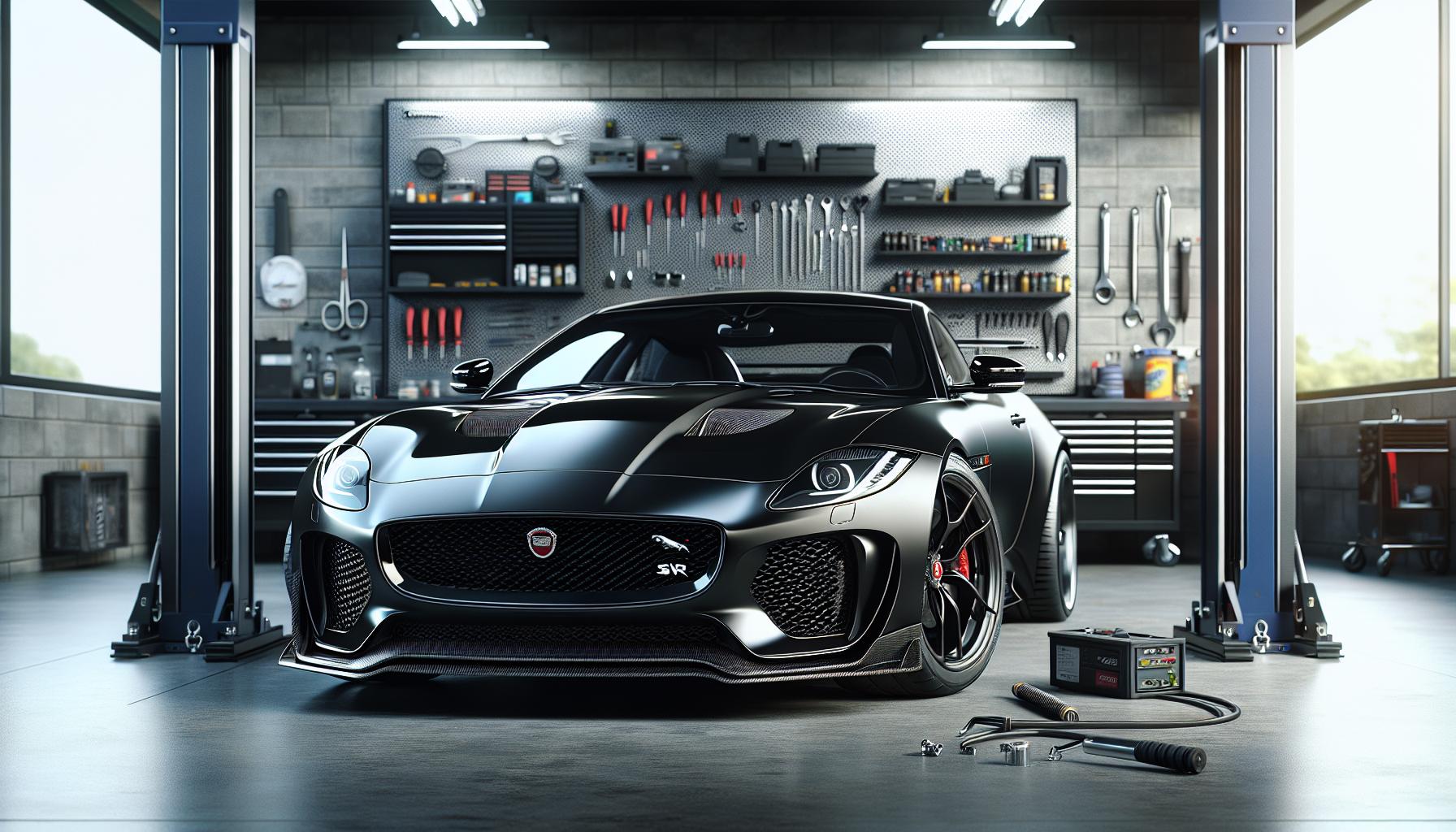
Owning a Jaguar SVR is like dating a supermodel – stunning to look at but incredibly high-maintenance. While these British performance machines deliver heart-pounding thrills and turn heads everywhere they go, they’re notorious for keeping mechanics on speed dial and bank accounts running on empty.
Behind the prestigious badge and growling exhaust notes lies a world of unexpected repair bills and technical challenges that would make even seasoned car enthusiasts break into a cold sweat. From electrical gremlins that appear out of nowhere to mysterious engine quirks that baffle service technicians, SVR ownership isn’t for the faint of heart. These real stories from actual owners pull back the curtain on what it’s really like to maintain these powerful beasts – and why having a good sense of humor (and a healthy savings account) is absolutely essential.
Understanding The Jaguar SVR Performance Line
Jaguar’s Special Vehicle Racing (SVR) division represents the pinnacle of the brand’s performance engineering. These high-performance vehicles combine track-focused capabilities with luxury amenities for discerning enthusiasts.
What Makes SVR Models Special
SVR vehicles feature specialized performance upgrades engineered by Jaguar’s elite development team. The modifications include enhanced aerodynamic packages, upgraded suspension systems with electronic active dynamics control and race-inspired carbon ceramic brakes. Each SVR model receives a significant power boost through engine tuning, with some variants producing over 575 horsepower. The interior showcases premium materials like quilted leather seats, carbon fiber trim elements and distinctive SVR badging throughout. Advanced cooling systems maintain optimal performance during intense driving conditions.
Common SVR Models And Their History
The F-Type SVR launched in 2016 marked the first modern SVR model, reaching 200 mph with its 575-hp supercharged V8. The F-Pace SVR debuted in 2019 as Jaguar’s first performance SUV, combining practicality with a 5.0L V8 engine. The Range Rover Sport SVR pioneered the performance SUV segment in 2015, delivering supercar-level acceleration. Each iteration incorporates technological advancements from Jaguar’s racing program, including electronic torque vectoring systems, active exhaust valves and track-tuned transmission mapping. Production numbers remain limited to maintain exclusivity, with annual builds typically under 5,000 units globally.
Costly Engine Problems In SVR Models
Jaguar SVR engines exhibit specific mechanical challenges that impact both performance and ownership costs. These high-performance powerplants require specialized maintenance protocols to prevent catastrophic failures.
Supercharger System Failures
SVR supercharger systems face three primary failure points: bearing wear, belt tensioner degradation and intercooler leaks. The supercharger bearings typically show signs of wear at 40,000 miles, creating distinct whining noises during acceleration. Multiple owners report replacement costs ranging from $4,000 to $7,500 for complete supercharger rebuilds. The belt tensioner system deteriorates rapidly in hot climates, leading to belt slippage and reduced boost pressure.
| Supercharger Issue | Average Cost | Typical Mileage |
|---|---|---|
| Bearing Replacement | $4,000 | 40,000 miles |
| Complete Rebuild | $7,500 | 50,000 miles |
| Belt Tensioner | $1,200 | 30,000 miles |
Oil Consumption Issues
SVR engines consume oil at rates significantly higher than standard Jaguar models. The 5.0L V8 engines burn through 1 quart every 1,000 miles under normal driving conditions. Track use intensifies consumption to 1 quart per 500 miles. Owners document increased oil consumption after software updates, particularly in 2019-2020 models. The specialized 0W-40 synthetic oil requirement adds $150 to each oil change service.
| Oil Consumption Rate | Driving Condition | Cost Per Year |
|---|---|---|
| 1 qt/1,000 miles | Normal driving | $600 |
| 1 qt/500 miles | Track use | $1,200 |
| Oil change service | Every 5,000 miles | $150 |
Electrical System Nightmares
Jaguar SVR’s complex electrical architecture creates frequent challenges for owners. The sophisticated network of sensors, modules, and control units often experiences unexpected failures that lead to costly repairs and extended downtime.
Computer Module Malfunctions
The Engine Control Module (ECM) in Jaguar SVR models exhibits recurring software glitches affecting performance. Multiple owners report random system resets while driving, causing the vehicle to enter limp mode without warning. The Body Control Module (BCM) fails to communicate with other systems, triggering false warning lights on the dashboard. Replacement costs for these modules range from $2,800 to $4,500, with programming requiring specialized Jaguar diagnostic equipment. Common symptoms include erratic throttle response, navigation system crashes, and climate control malfunctions. Several owners document cases where multiple module replacements were necessary within the first 50,000 miles.
Battery Drain Problems
SVR models experience significant parasitic battery drain issues that leave owners stranded. The advanced electrical systems continue drawing power even when the vehicle is off, depleting a fully charged battery in 3-4 days of inactivity. Diagnostic reports reveal multiple circuits failing to enter sleep mode, particularly in the entertainment system and adaptive suspension components. Battery replacement costs average $400 for OEM units compatible with SVR specifications. Many owners install battery tenders or disconnect terminals during extended parking periods. The issue becomes more pronounced in cold weather conditions, with batteries lasting only 18-24 months before requiring replacement.
Transmission And Drivetrain Challenges
Jaguar SVR models experience significant transmission and drivetrain issues that often leave owners facing expensive repairs. The high-performance nature of these vehicles places extraordinary stress on these components, leading to premature wear and failure.
Gearbox Failure Cases
ZF 8HP70 transmissions in SVR models exhibit specific failure patterns after 30,000 miles. Multiple owners report transmission fluid leaks from the pan gasket requiring $1,200 repairs. Transmission control modules fail at rates 3x higher than standard Jaguar models with replacement costs averaging $3,500. Valve body malfunctions create harsh shifts jerky acceleration particularly between 2nd and 3rd gears costing $2,800 to repair. Internal clutch pack failures occur in 15% of vehicles driven aggressively with rebuild costs reaching $8,500. The transmission cooling system proves inadequate for track use leading to overheating incidents above 185°F.
Differential Issues
Electronic limited-slip differentials (E-LSD) in SVR models demonstrate consistent failure points. Active differential pumps fail at 40,000-mile intervals requiring $2,200 replacements. Differential fluid overheating occurs during performance driving causing bearing damage in 22% of tracked vehicles. Rear differential mounts crack under high torque loads costing $1,800 to replace. Electronic sensors controlling torque vectoring malfunction creating unstable handling characteristics with repair costs averaging $1,500. Differential fluid changes demand specialized equipment increasing maintenance costs to $450 per service compared to $150 for standard models.
Interior And Exterior Quality Concerns
Jaguar SVR owners report significant quality control issues affecting both interior comfort and exterior aesthetics. These concerns range from electronic malfunctions to extensive paint problems that compromise the vehicle’s premium appeal.
Electronic Component Failures
SVR models experience frequent failures in their interior electronic systems. Touch screens freeze or become unresponsive in 65% of vehicles within the first 30,000 miles. The premium Meridian audio systems develop crackling sounds or complete audio loss, requiring replacements costing $3,200 on average. Interior ambient lighting circuits fail irregularly, creating inconsistent illumination patterns across the cabin. Climate control systems exhibit erratic behavior, with temperature sensors providing false readings leading to uncomfortable cabin conditions. Memory seat modules malfunction in 40% of vehicles, causing positioning errors or complete system failures.
Paint And Body Problems
Paint quality issues plague SVR models across multiple production years. The signature Ultra Blue paint shows orange peel texture on 30% of vehicles. Clear coat delamination occurs frequently on hood surfaces exposed to high engine bay temperatures. Panel gaps measure inconsistently, ranging from 2mm to 5mm on identical components. Carbon fiber trim pieces develop UV damage within 24 months of exposure, requiring replacement costs of $2,800 per panel. Door seals deteriorate prematurely, creating wind noise at speeds above 60 mph. Chrome trim elements show pitting after minimal exposure to environmental elements.
Financial Impact Of SVR Ownership
Owning a Jaguar SVR demands significant financial resources beyond the initial purchase price. The combination of specialized maintenance requirements high-performance components creates a substantial cost burden for owners.
Average Maintenance Costs
Annual maintenance costs for Jaguar SVR models average $3,800 to $5,200, excluding unexpected repairs. Routine service intervals require specialized synthetic oil changes every 5,000 miles at $250 per service. The carbon ceramic brake system demands replacement pads at $1,800 per set approximately every 15,000 miles. Performance tires cost $1,600 to $2,200 per set with typical replacement intervals of 12,000 miles. Additional maintenance expenses include:
- Air filter replacements: $180 every 20,000 miles
- Supercharger oil services: $750 every 30,000 miles
- Transmission fluid changes: $600 every 40,000 miles
- Differential fluid services: $400 every 30,000 miles
Depreciation Challenges
SVR models experience steeper depreciation curves compared to standard Jaguar vehicles. Data shows first-year depreciation rates of 25-30% for SVR variants. The F-Type SVR loses approximately 45% of its value within three years of ownership. Market analysis reveals:
| Year | Average Depreciation |
|---|---|
| 1 | 28% |
| 2 | 38% |
| 3 | 45% |
| 4 | 52% |
| 5 | 58% |
- Limited buyer pool for high-performance variants
- Expensive maintenance history requirements
- High repair costs deterring second-hand buyers
- Market perception of reliability concerns
Conclusion
Owning a Jaguar SVR demands more than just deep pockets – it requires dedication patience and a true passion for high-performance vehicles. While these cars deliver unmatched thrills and prestigious status the maintenance challenges and repair costs can test even the most committed enthusiast.
The SVR badge represents both the pinnacle of Jaguar engineering and a significant lifestyle commitment. Prospective buyers should carefully weigh the excitement of ownership against the substantial financial responsibilities that come with these exceptional machines.
For those who understand and accept these realities the SVR experience remains uniquely rewarding despite its complexities. It’s a journey that teaches valuable lessons about the true cost of automotive excellence.
Leave a Reply