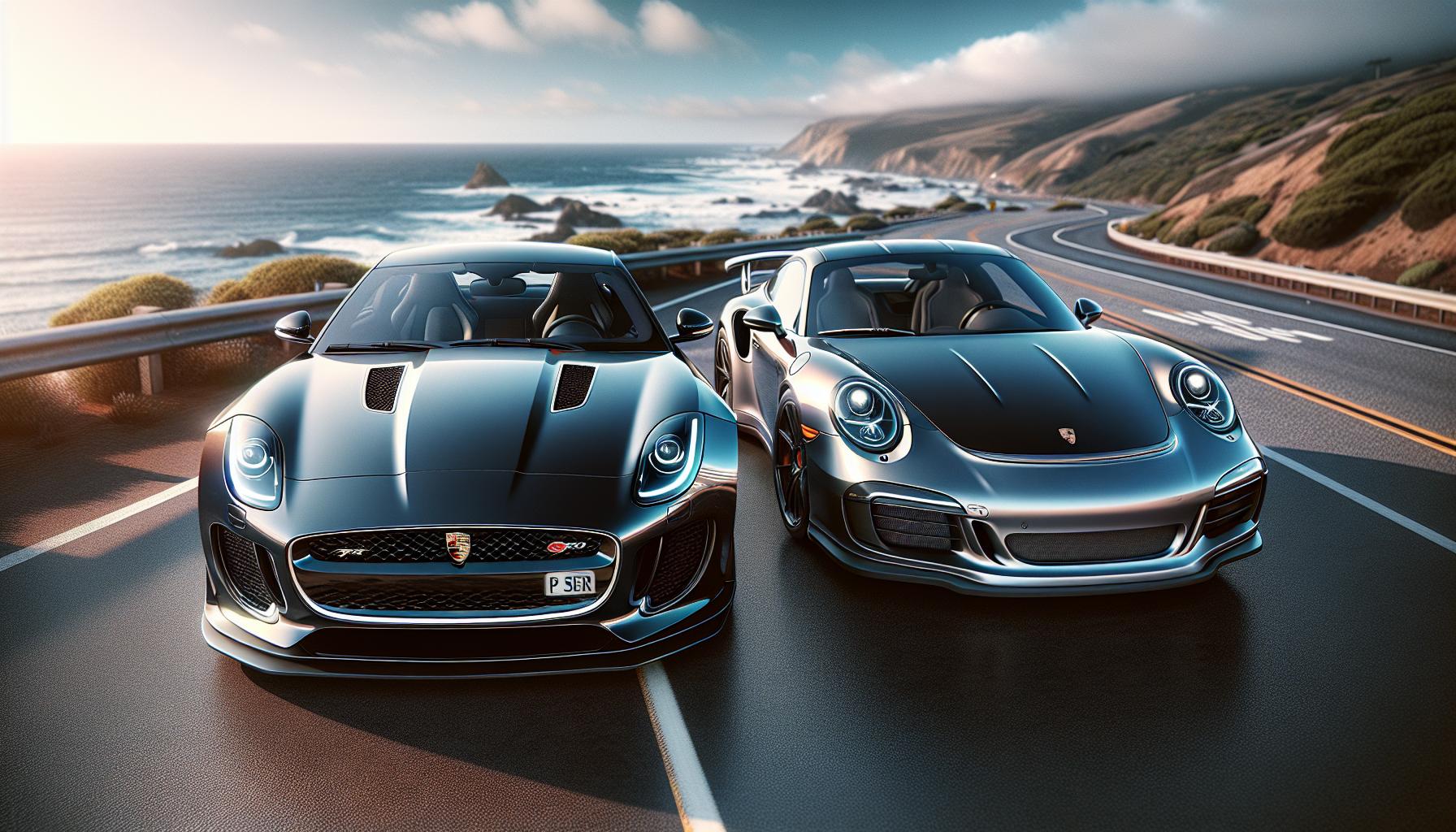
The battle of luxury performance cars just got more interesting. While Porsche has long dominated the high-performance arena there’s a British contender that’s been quietly sharpening its claws. The Jaguar SVR lineup is ready to pounce and it’s bringing some serious attitude to this German-British showdown.
When it comes to pure automotive theater nobody does it quite like these two. Porsche brings decades of motorsport heritage and precision engineering while Jaguar SVR delivers British sophistication with a wild side. It’s like comparing James Bond to The Transporter – both are incredibly capable but each brings its own unique flavor to the party. Let’s dive into this unexpected matchup that’s got everyone talking and find out if the big cat can really keep up with Stuttgart’s finest.
The Legacy Behind These Performance Icons
The racing heritage of both Jaguar SVR and Porsche represents decades of motorsport excellence that shapes their modern performance vehicles. Each manufacturer brings distinct engineering philosophies from the racetrack to their production cars.
Jaguar SVR’s Racing Heritage
Jaguar’s racing legacy dates back to the 1950s with the iconic D-Type’s domination at Le Mans. The Special Vehicle Racing division emerged from Jaguar’s Competition Department in 2014, incorporating race-proven technologies into street-legal vehicles. SVR models feature aerodynamic innovations first tested in GT racing programs, including advanced carbon fiber components refined during professional motorsport competitions. The F-Type SVR demonstrates this racing DNA through its 575-horsepower supercharged V8 engine paired with track-validated suspension systems.
Porsche’s Motorsport DNA
Porsche holds 19 outright victories at Le Mans, establishing an unmatched record in endurance racing. The 911 GT program continues to influence road car development through direct technology transfer from race cars. Porsche’s motorsport innovations include the PDK transmission, pioneered in the 956 race car before entering production vehicles. The GT3 RS exemplifies this racing heritage with its naturally aspirated flat-six engine producing 518 horsepower coupled with aerodynamic elements tested in professional competition.
Design and Aesthetics
The design philosophy of Jaguar SVR and Porsche represents distinct approaches to performance car aesthetics. Each manufacturer brings unique styling elements that reflect their heritage while incorporating modern performance-focused features.
Exterior Styling Face-Off
The Jaguar SVR lineup showcases aggressive British styling with pronounced hood bulges large front air intakes dramatic side skirts. The F-Type SVR features a distinctive mesh grille carbon fiber accents an active rear spoiler that deploys at 60 mph. Porsche maintains its iconic silhouette particularly in the 911 series with its distinctive sloping roofline rear-mounted engine configuration evolutionary design updates. The 911 GT3 exhibits purposeful aerodynamics through its front splitter rear wing side skirts.
| Design Element | Jaguar SVR | Porsche |
|---|---|---|
| Front Profile | Vertical grille mesh pattern | Horizontal cooling slats |
| Side Profile | Muscular haunches | Clean lines |
| Rear Design | Active spoiler | Fixed wing |
| Signature Elements | Hood vents | Round headlights |
Interior Luxury Comparison
The Jaguar SVR cabin combines traditional British luxury with performance-focused elements. Diamond-quilted leather seats SVR badging aluminum paddle shifters create a premium racing environment. The digital instrument cluster displays performance data while maintaining classic analog styling cues. Porsche interiors emphasize driver focus with a minimalist approach. The GT sport steering wheel features alcantara trim while the instrument cluster places the tachometer center stage. Both manufacturers incorporate carbon fiber trim elements aluminum accents throughout their cabins.
| Interior Feature | Jaguar SVR | Porsche |
|---|---|---|
| Seat Design | Diamond quilted sport | Sport bucket |
| Materials | Windsor leather | Leather alcantara |
| Interface | 12.3″ touchscreen | PCM system |
| Layout | 2+2 configuration | 2+2 or pure 2-seater |
Performance Metrics That Matter
Objective performance data reveals the distinct engineering philosophies between Jaguar SVR and Porsche models. Raw numbers tell only part of the story in this high-stakes performance battle.
Engine and Power Delivery
The Jaguar F-Type SVR delivers 575 horsepower from its supercharged 5.0-liter V8 engine, creating instant throttle response at any speed. The forced induction setup generates 516 lb-ft of torque, available from 3,500 RPM. Porsche’s 911 Turbo S counters with a twin-turbocharged 3.8-liter flat-six producing 640 horsepower and 590 lb-ft of torque. Each manufacturer takes a different approach to power delivery – Jaguar opts for linear supercharged thrust while Porsche employs sophisticated twin-turbo technology for maximum efficiency.
Handling and Track Capability
Porsche’s rear-engine layout creates unique handling characteristics with exceptional traction exiting corners. The 911’s sophisticated active suspension management system adjusts damping rates 200 times per second. Jaguar SVR models utilize an advanced all-wheel-drive system with torque vectoring, distributing power between all four wheels based on available grip. Track testing reveals Porsche’s superior mechanical grip through high-speed corners, while the Jaguar exhibits more neutral handling characteristics with its front-engine configuration.
| Model | 0-60 mph | Top Speed | Quarter Mile |
|---|---|---|---|
| Jaguar F-Type SVR | 3.5 sec | 200 mph | 11.7 sec |
| Porsche 911 Turbo S | 2.6 sec | 205 mph | 10.5 sec |
The Porsche 911 Turbo S demonstrates superior straight-line acceleration thanks to its launch control system and rear-weight bias. Its PDK transmission executes gear changes in 100 milliseconds. The Jaguar F-Type SVR matches Porsche’s terminal velocity capabilities while delivering dramatic acceleration accompanied by its signature V8 exhaust note.
Technology and Innovation
Advanced technology integration shapes the driving experience in both Jaguar SVR and Porsche vehicles, with each manufacturer implementing distinct approaches to enhance performance, safety and connectivity.
Driver Assistance Features
Jaguar SVR models incorporate adaptive cruise control with queue assist technology detecting vehicles up to 180 meters ahead. The blind spot monitoring system uses radar sensors covering areas up to 70 meters behind the vehicle. Active safety features include autonomous emergency braking lane keeping assist emergency brake assist. Porsche models feature InnoDrive adaptive cruise control with predictive optimization calculating speed profiles 1.8 miles ahead. The Night Vision Assist system detects pedestrians animals at distances up to 300 meters using thermal imaging cameras. Porsche’s Active Safe integrates collision avoidance with cross-traffic alerts rear autonomous braking.
Infotainment Systems
Jaguar’s Touch Pro Duo system features dual 10-inch HD touchscreens with customizable interfaces smartphone integration. The 12.3-inch digital instrument cluster displays performance data including g-force measurements lap times torque distribution. Connected navigation provides real-time traffic updates door-to-door routing. Porsche Communication Management includes a 10.9-inch touchscreen display with natural voice control Apple CarPlay Android Auto integration. The Porsche Track Precision app records analyzes driving data from 150 international circuits. The Burmester High-End 3D Surround Sound System delivers 855 watts through 13 speakers in Porsche models.
Price and Value Proposition
The price comparison between Jaguar SVR and Porsche models reveals significant differences in market positioning. Base prices for the Jaguar F-Type SVR start at $123,600, offering competitive value against the Porsche 911 Turbo’s $174,300 entry point.
| Model | Base Price | Key Features Included |
|---|---|---|
| Jaguar F-Type SVR | $123,600 | SVR Performance Seats, Carbon Fiber Package, Active Sports Exhaust |
| Porsche 911 Turbo | $174,300 | Sport Chrono Package, PASM Sport Suspension, LED Matrix Headlights |
| Jaguar F-PACE SVR | $84,600 | Performance SUV Package, SVR Interior, Adaptive Dynamics |
| Porsche Macan Turbo | $94,200 | Air Suspension, Sport Design Package, Premium Package Plus |
Standard equipment levels differentiate these performance vehicles substantially. Jaguar SVR models include premium features like quilted leather seats, carbon fiber trim packages, active sports exhaust systems at their base price. Porsche follows a different strategy with extensive customization options, though many desirable features come as costly add-ons.
Depreciation rates impact long-term ownership costs significantly. Porsche models traditionally maintain stronger residual values, retaining 58% of their original value after three years compared to Jaguar SVR’s 52% retention rate.
Running costs showcase distinct differences between the brands. Jaguar SVR ownership includes a 5-year/60,000-mile warranty package plus complimentary maintenance, while Porsche provides a 4-year/50,000-mile warranty with maintenance at additional cost.
Everyday Usability
Daily driving dynamics present distinct experiences between Jaguar SVR models and their Porsche counterparts. Both manufacturers address practical considerations while maintaining their performance-oriented nature.
Comfort and Practicality
The Jaguar F-Type SVR combines grand tourer comfort with sports car capabilities through its adaptive suspension system with continuously variable damping. Interior space accommodates two passengers with 14.4 cubic feet of cargo capacity in the coupe variant. The cabin features 14-way adjustable performance seats with heating cooling functions. Porsche 911 models provide 4.6 cubic feet of front trunk space plus additional rear storage behind the front seats. The 911’s rear seats fold down to create a flat cargo shelf extending total storage to 9.3 cubic feet. All-round visibility excels in the 911 due to its large greenhouse design compared to the F-Type’s more restrictive sight lines.
Maintenance and Reliability
Jaguar SVR models require service intervals at 16,000 miles or 12 months. The supercharged V8 engine needs premium 93 octane fuel with an EPA-rated consumption of 16 mpg city 23 mpg highway. Porsche schedules maintenance at 10,000-mile intervals with annual inspections. The 911 Turbo demonstrates superior fuel efficiency at 19 mpg city 24 mpg highway. Long-term reliability data from J.D. Power shows Porsche scoring 86 out of 100 for dependability versus Jaguar’s 82. Parts availability remains more extensive for Porsche models through a larger dealer network across North America.
| Model | Service Interval | City MPG | Highway MPG | Reliability Score |
|---|---|---|---|---|
| Jaguar SVR | 16,000 miles | 16 | 23 | 82/100 |
| Porsche 911 | 10,000 miles | 19 | 24 | 86/100 |
Conclusion
Both Jaguar SVR and Porsche demonstrate exceptional engineering prowess in their pursuit of automotive excellence. While Porsche maintains its position as the benchmark for precision engineering and track performance the Jaguar SVR lineup proves it’s a worthy challenger with its blend of British luxury and raw power.
The choice between these automotive titans ultimately comes down to personal preference. Drivers seeking the ultimate track weapon and proven motorsport heritage will gravitate toward Porsche. Those who value distinctive styling aggressive character and a more dramatic driving experience will find their match in Jaguar’s SVR offerings.
This rivalry showcases how competition drives innovation in the luxury performance segment benefiting enthusiasts with increasingly impressive vehicles from both manufacturers.
Leave a Reply