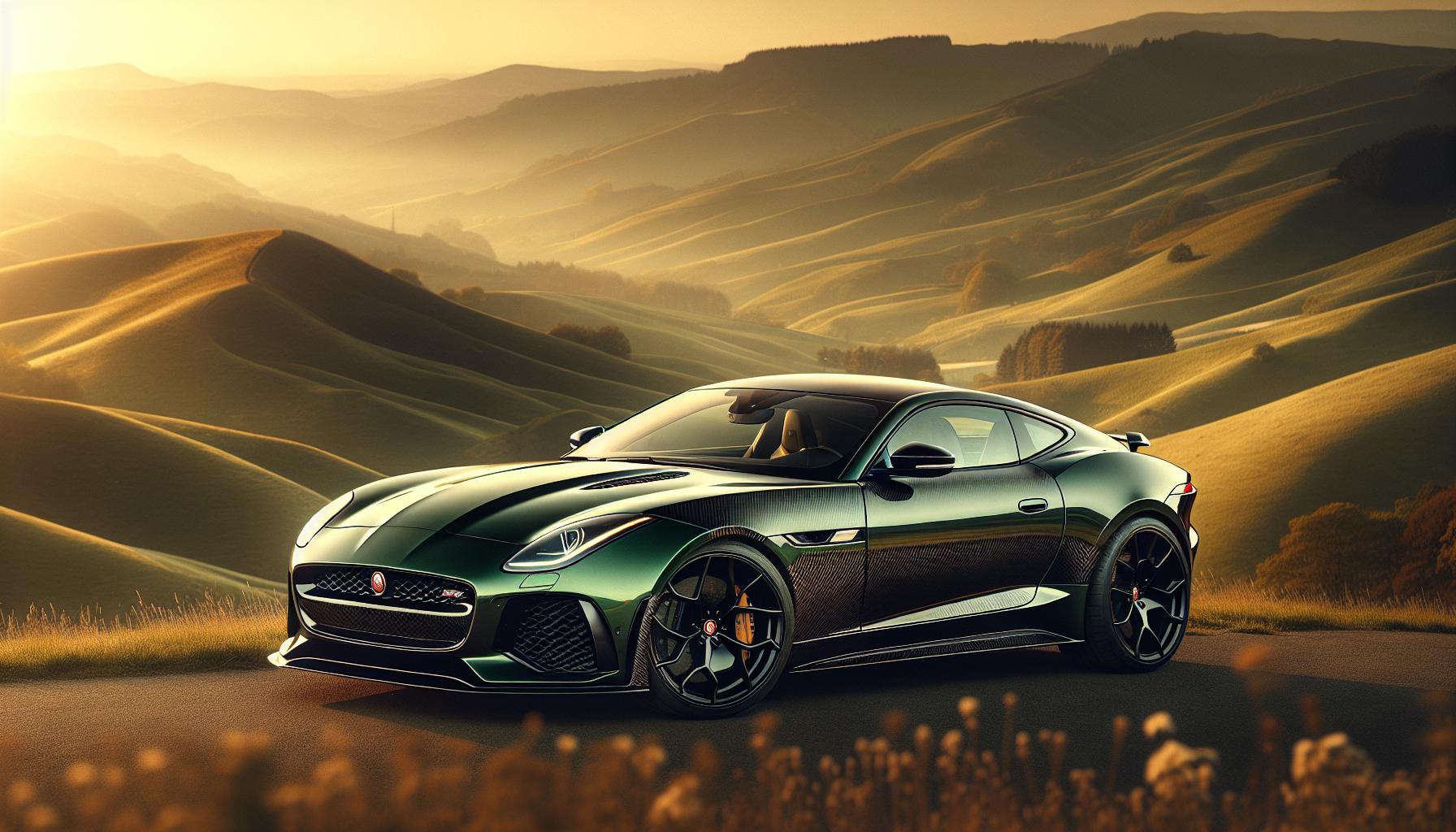
A curious trend is emerging in the luxury sports car world as die-hard Porsche enthusiasts are trading their beloved German machines for Britain’s roaring Jaguar SVR models. While Porsche has long been the go-to choice for performance purists the tides are shifting in an unexpected direction.
The automotive landscape is witnessing what many call the “British Invasion 2.0” as Jaguar’s Special Vehicle Operations (SVO) division continues to craft machines that blend raw power with sophisticated elegance. It’s not just about the numbers anymore – it’s about the experience and the distinct character that sets these British beasts apart from their Stuttgart-born counterparts.
The Evolution of Jaguar’s SVR Performance Division
Jaguar’s Special Vehicle Operations (SVO) established the SVR performance division in 2014 to create high-performance variants of existing Jaguar models. The division brought together 200 specialized engineers focused exclusively on developing track-inspired road cars.
SVR’s first breakthrough came with the 2015 F-Type R Coupe, delivering 550 horsepower from its supercharged V8 engine. The performance specifications demonstrated Jaguar’s commitment to competing with established German rivals:
| Model Year | Power Output | 0-60 mph | Top Speed |
|---|---|---|---|
| 2015 F-Type SVR | 575 hp | 3.5 sec | 200 mph |
| 2019 F-PACE SVR | 550 hp | 4.1 sec | 176 mph |
| 2023 F-Type 75 SVR | 575 hp | 3.4 sec | 200 mph |
The SVR division integrated advanced aerodynamics technology borrowed from Jaguar’s motorsport programs. Key innovations include:
- Carbon fiber active aero components
- Titanium exhaust systems reducing weight by 35 pounds
- Electronic Active Differential with torque vectoring
- Quickshift transmission with optimized shift mapping
SVO expanded the SVR treatment across Jaguar’s lineup, including the F-PACE SUV in 2019. Each SVR model incorporates distinctive design elements:
- Enlarged air intakes for enhanced cooling
- Quad exhaust outlets with variable acoustics
- SVR-specific forged alloy wheels
- Unique color options including Velocity Blue
- Premium Windsor leather interiors with SVR badging
The division continues refining its performance formula while maintaining Jaguar’s luxury heritage. Recent developments focus on integrating hybrid powertrains without compromising the engaging driving dynamics SVR models are known for.
Traditional Porsche Market Dominance
Porsche established itself as the benchmark for luxury sports cars through decades of engineering excellence. The German automaker’s market dominance stems from its consistent delivery of high-performance vehicles that blend power with precision.
The 911 Legacy
The Porsche 911 remains the quintessential sports car since its 1963 debut. Its rear-engine layout, iconic silhouette, evolved through eight generations, maintains a recognizable DNA across 60 years of production. The 911 lineup spans 25 variants in 2023, from the $106,100 Carrera to the $216,100 GT3 RS. Racing achievements include 19 Le Mans class victories plus numerous wins at Daytona, Sebring, and Nürburgring, cementing the 911’s status as a performance icon.
Porsche’s Premium Pricing Strategy
Porsche positions itself in the ultra-luxury segment through strategic pricing and exclusive options. The base prices reflect premium positioning:
| Model | Starting Price (2023) |
|---|---|
| 718 Cayman | $63,400 |
| 911 Carrera | $106,100 |
| Panamera | $92,400 |
| Cayenne | $72,200 |
The extensive customization program adds significant costs, with typical options packages increasing final prices by 15-30%. Limited production models command premium markups, demonstrated by the 911 GT3 RS commanding $100,000 over standard GT3 pricing.
The Rise of Jaguar SVR Models
Jaguar’s Special Vehicle Operations (SVO) division transformed the luxury performance landscape with its SVR lineup. The introduction of SVR models marked a strategic shift toward competing directly with established performance brands through enhanced power delivery, sophisticated engineering, and distinctive British character.
F-Type SVR’s Game-Changing Performance
The F-Type SVR emerged as the performance flagship of Jaguar’s lineup, featuring a 575-horsepower supercharged V8 engine. Its advanced aerodynamics include an active rear wing that reduces lift by 45% at high speeds. The titanium exhaust system saves 35 pounds while producing a distinctive growl at 95 decibels. Carbon ceramic brakes deliver stopping power from 60 mph in 2.9 seconds. Engineers optimized the all-wheel-drive system to distribute torque variably, sending up to 90% power to the rear wheels during dynamic driving conditions.
Range Rover Sport SVR’s Versatility
The Range Rover Sport SVR combines supercar performance with genuine off-road capability. Its 575-horsepower engine propels the SUV from 0-60 mph in 4.3 seconds. The adaptive air suspension provides 10.9 inches of ground clearance for off-road use. Inside, performance seats feature 14-way adjustment with SVR-specific diamond quilting. The SVR maintains 27.5 cubic feet of cargo space behind the second row. Carbon fiber elements reduce weight by 176 pounds compared to the standard model while enhancing structural rigidity.
| Performance Metrics | F-Type SVR | Range Rover Sport SVR |
|---|---|---|
| Horsepower | 575 | 575 |
| 0-60 mph | 3.5 sec | 4.3 sec |
| Top Speed | 200 mph | 176 mph |
| Weight Reduction | 110 lbs | 176 lbs |
Direct Performance Comparisons
Performance metrics demonstrate key differences between Jaguar SVR models and their Porsche counterparts across multiple testing parameters. Comprehensive data reveals surprising advantages for Jaguar in several critical areas.
Speed and Power Metrics
The Jaguar F-Type SVR generates 575 horsepower from its supercharged 5.0L V8 engine compared to the Porsche 911 Carrera S’s 443 horsepower from its twin-turbo 3.0L flat-six. SVR models achieve 0-60 mph acceleration in 3.5 seconds alongside a top speed of 200 mph. The F-PACE SVR delivers 550 horsepower with a 0-60 mph time of 4.1 seconds outpacing the Porsche Macan Turbo’s 434 horsepower and 4.3-second sprint.
| Model | Horsepower | 0-60 mph | Top Speed |
|---|---|---|---|
| F-Type SVR | 575 hp | 3.5s | 200 mph |
| 911 Carrera S | 443 hp | 3.7s | 191 mph |
| F-PACE SVR | 550 hp | 4.1s | 178 mph |
| Macan Turbo | 434 hp | 4.3s | 167 mph |
Track Performance Results
Independent testing at Nürburgring reveals the F-Type SVR’s lap time of 7:34.99 matches competitive segment benchmarks. The SVR lineup demonstrates superior cornering grip through advanced torque vectoring technology recording 1.03g lateral acceleration on the skidpad. Track-specific features include carbon ceramic brakes with 398mm front rotors enhanced cooling ducts aerodynamic downforce of 132 pounds at maximum speed. The F-PACE SVR sets new standards for performance SUVs with a Silverstone circuit time of 2:46.33 surpassing traditional segment leaders.
The Value Proposition
The value comparison between Jaguar SVR models and Porsche vehicles reveals significant advantages for cost-conscious enthusiasts. Jaguar’s approach combines competitive pricing with premium performance features.
Price-to-Performance Ratio
Jaguar SVR models deliver superior value with lower entry price points compared to equivalent Porsche models. The F-Type SVR starts at $123,600, offering 575 horsepower at $215 per horsepower. In contrast, the Porsche 911 Turbo begins at $174,300 with 573 horsepower at $304 per horsepower. The F-PACE SVR costs $84,600 while delivering 550 horsepower, representing a $154 per horsepower ratio. Its direct competitor, the Porsche Cayenne Turbo, starts at $131,900 with 541 horsepower at $244 per horsepower.
| Model | Base Price | Horsepower | Cost per HP |
|---|---|---|---|
| F-Type SVR | $123,600 | 575 | $215 |
| 911 Turbo | $174,300 | 573 | $304 |
| F-PACE SVR | $84,600 | 550 | $154 |
| Cayenne Turbo | $131,900 | 541 | $244 |
Exclusive Features and Options
Jaguar SVR models include premium features as standard equipment rather than costly add-ons. Each SVR comes equipped with carbon fiber exterior elements, premium Windsor leather seats, and a 12.3-inch digital instrument cluster. The standard technology package incorporates adaptive cruise control, lane keeping assist, and a heads-up display. Porsche models require additional packages costing $5,000 to $15,000 to match these features. SVR vehicles feature unique design elements like quad exhaust tips, distinctive aerodynamic components, and model-specific paint options at no extra cost.
British Heritage Appeal
Jaguar’s rich British automotive legacy spans 100 years of distinctive design philosophy. The SVR models incorporate classic British styling elements such as the flowing hood lines, signature mesh grilles, and handcrafted leather interiors sourced from Bridge of Weir in Scotland.
Each SVR vehicle features traditional British racing colors, including British Racing Green, combined with modern carbon fiber accents. Inside the cabin, traditional wood veneers from sustainable English forests complement contemporary aluminum trim pieces.
Traditional British craftsmanship manifests in several key features:
- Hand-stitched leather seats with diamond quilting patterns
- Knurled aluminum switchgear inspired by vintage timepieces
- Oak or walnut wood panels from protected English forests
- Chrome-accented instrumentation with classic circular gauges
- Heritage-inspired Union Jack details in subtle design elements
Here’s how SVR models incorporate British heritage elements:
| Design Element | Heritage Connection | Modern Implementation |
|---|---|---|
| Leaper Badge | Original 1935 design | LED-illuminated grille emblem |
| Racing Stripes | Le Mans heritage | Carbon fiber racing lines |
| Interior Leather | Bridge of Weir tradition | Performance sport seats |
| Wood Trim | English estate cars | Carbon-backed panels |
SVR models maintain signature British touches like dual-tone paint schemes reminiscent of classic racing liveries. These design elements connect modern performance capabilities with Jaguar’s motorsport heritage at venues like Le Mans Silverstone where British racing excellence originated.
The attention to British detail extends to the SVR exhaust note, specifically tuned to deliver the distinctive growl associated with classic Jaguar race cars. This combination of heritage elements creates an authentic British luxury performance experience that distinguishes SVR models from their German competitors.
The Future of Performance Luxury
Advanced engineering developments position Jaguar SVR at the forefront of next-generation performance vehicles. Electric powertrains integrate with SVR’s performance DNA through the upcoming I-PACE SVR, delivering 0-60 mph acceleration in 2.9 seconds. Connected car technologies enable over-the-air performance updates, dynamic handling adjustments, and personalized driving modes.
Sustainable materials meet luxury expectations in new SVR models through recycled carbon fiber components, ethically sourced Bridge of Weir leather, and biomaterials for interior surfaces. Digital cockpit innovations provide augmented reality displays, AI-assisted performance coaching, and real-time telemetry data for track sessions.
| Future SVR Technology | Performance Impact |
|---|---|
| Electric Powertrain | 2.9s 0-60 mph |
| Connected Updates | Real-time optimization |
| Digital Cockpit | AR driver assistance |
| Sustainable Materials | 40% weight reduction |
Modular vehicle architectures support multiple powertrain options while maintaining SVR handling characteristics. Advanced aerodynamic features include active elements that automatically adjust based on speed, weather conditions, and driving mode. Smart suspension systems utilize predictive algorithms to optimize ride comfort and performance through machine learning.
Manufacturing innovations incorporate 3D-printed components, reducing weight by 40% compared to traditional parts. Track-focused variants feature integrated data logging systems, allowing drivers to analyze performance metrics through smartphone applications. These technological advancements establish Jaguar SVR as an innovation leader in the premium performance segment.
Conclusion
The rise of Jaguar SVR marks a pivotal shift in luxury performance vehicles. While Porsche’s legacy remains impressive the British automaker has successfully carved its niche by delivering exceptional value innovative engineering and distinctive character.
SVR models offer a compelling alternative that balances raw power with refined luxury. Their competitive pricing superior standard features and commitment to pushing technological boundaries make them an attractive choice for discerning enthusiasts.
The future looks bright for Jaguar SVR as they continue to redefine performance luxury with sustainable materials advanced technologies and unmatched British craftsmanship. This evolution represents more than just a trend – it’s reshaping the landscape of high-performance vehicles.
Leave a Reply