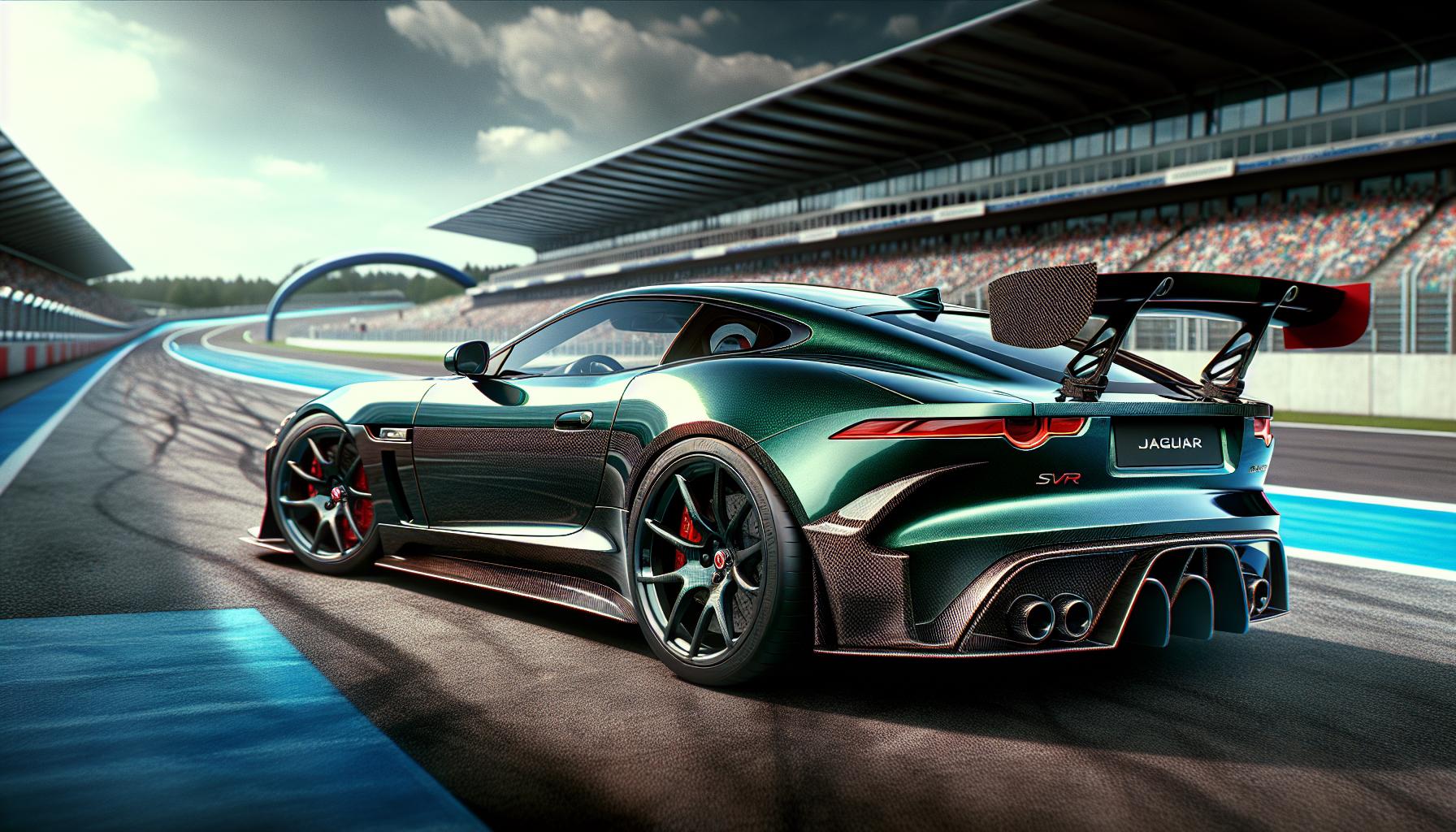
The automotive world’s been holding its breath as Jaguar’s SVR division unleashes a new breed of performance beasts onto unsuspecting streets. While Porsche has long reigned supreme in the high-performance arena their crown might just be slipping. The British are coming and they’re not bringing tea this time.
Jaguar’s Special Vehicle Operations (SVO) team has transformed from a quiet corner of the company into a full-blown performance powerhouse. With the latest SVR models pushing boundaries and breaking records they’re not just competing with Stuttgart’s finest – they’re hunting them down. The raw power stunning design and track-ready capabilities of these new cats have got Porsche engineers looking nervously over their shoulders. And for good reason.
The Rise of Jaguar’s Special Vehicle Operations
Jaguar’s Special Vehicle Operations (SVO) division emerged in 2014 as a dedicated performance unit, transforming standard Jaguar models into high-performance machines. This specialized department operates from a state-of-the-art technical center in Warwickshire, England.
Meet the SVR Performance Division
The SVR performance division represents Jaguar’s elite engineering team, consisting of 200 automotive specialists focused on creating exceptional vehicles. Each SVR model undergoes 575 hours of aerodynamic testing in advanced wind tunnels plus 250,000 miles of durability testing across diverse terrain types. The division utilizes cutting-edge technologies like 3D printing for rapid prototyping and carbon fiber manufacturing capabilities. Notable achievements include the F-Type SVR reaching 0-60 mph in 3.5 seconds and the F-Pace SVR delivering 550 horsepower from its supercharged V8 engine.
The Vision Behind the Brand
SVO’s mission centers on creating vehicles that combine luxury with extreme performance capabilities. The division follows three core principles: elevated power outputs, enhanced driving dynamics through advanced suspension systems and optimized aerodynamics. Engineers incorporate motorsport-derived technologies, including ceramic brake systems and electronic active differentials. SVO maintains strict quality controls, with each vehicle receiving 44 individual inspection points before certification. The team collaborates directly with Jaguar’s racing division to transfer track-proven innovations to road cars.
Head-to-Head: Jaguar F-Type SVR vs Porsche 911
A direct comparison between the Jaguar F-Type SVR and Porsche 911 reveals a fierce rivalry in the high-performance sports car segment. Both vehicles showcase exceptional engineering prowess backed by decades of motorsport heritage.
Power and Performance Specs
The F-Type SVR generates 575 horsepower from its 5.0-liter supercharged V8 engine compared to the Porsche 911 Turbo’s 573 horsepower from its 3.8-liter twin-turbo flat-six.
| Specification | Jaguar F-Type SVR | Porsche 911 Turbo |
|---|---|---|
| Horsepower | 575 hp | 573 hp |
| Torque | 516 lb-ft | 553 lb-ft |
| 0-60 mph | 3.5 seconds | 3.4 seconds |
| Top Speed | 200 mph | 198 mph |
| Weight | 3,759 lbs | 3,671 lbs |
The all-wheel-drive systems in both vehicles deliver optimal traction through advanced torque vectoring technology. Jaguar’s eight-speed automatic transmission matches the rapid-shift capabilities of Porsche’s PDK dual-clutch system.
Track Performance Comparison
The F-Type SVR recorded a Nürburgring lap time of 7:39.6 minutes competing directly with the 911 Turbo’s 7:38.9. Carbon ceramic brakes enable consistent stopping power during intense track sessions for both vehicles.
| Track Metric | Jaguar F-Type SVR | Porsche 911 Turbo |
|---|---|---|
| Nürburgring Time | 7:39.6 min | 7:38.9 min |
| Lateral G-Force | 1.03 G | 1.05 G |
| 60-0 mph Braking | 106 ft | 103 ft |
| Quarter Mile | 11.7 sec | 11.5 sec |
The SVR’s active aerodynamics package generates 132 pounds of downforce at maximum speed while the 911’s adaptive aero elements produce 137 pounds of downforce.
Engineering Excellence and Innovation
Jaguar’s SVR division exemplifies engineering prowess through advanced aerodynamic research and cutting-edge technological integration. The development process combines traditional craftsmanship with modern innovation to create vehicles that challenge established performance benchmarks.
Aerodynamic Advancements
The F-Type SVR’s aerodynamic design reduces lift by 45% compared to standard models through sophisticated computational fluid dynamics. Active aerodynamics include a deployable rear wing that automatically adjusts at speeds above 70 mph, generating 132 kg of downforce. Carbon fiber components in the front splitter channel air efficiently around the vehicle, while enlarged air intakes optimize engine cooling. The redesigned underfloor features strategically placed vanes directing airflow to enhance stability. Wind tunnel testing confirms a drag coefficient of 0.37, enabling the SVR to maintain high-speed stability without compromising fuel efficiency.
Cutting-Edge Technology Features
SVR models integrate advanced driver assistance systems with performance-focused technology. The 12.3-inch digital instrument cluster displays real-time performance data including g-force measurements lateral acceleration metrics. Adaptive Dynamics technology monitors vehicle movements 500 times per second adjusting suspension settings accordingly. The intelligent all-wheel-drive system features torque vectoring redistributing power between wheels in milliseconds. Carbon ceramic brakes incorporate smart cooling ducts that activate based on brake temperature sensors. The latest InControl Touch Pro infotainment system includes track telemetry functions recording lap times vehicle dynamics data for post-drive analysis.
The Driving Experience
Jaguar SVR models deliver a transformative driving experience that combines raw power with refined control. The engineering excellence translates into exceptional performance both on track and street.
Handling and Control
The F-Type SVR’s dynamic capabilities stem from its advanced suspension system featuring continuously variable dampers with multiple drive modes. Electronic Active Differential enhances cornering precision by distributing torque between the rear wheels. Carbon ceramic brakes provide fade-resistant stopping power with 6-piston calipers up front delivering consistent performance under extreme conditions. The all-wheel-drive system incorporates torque vectoring technology that adjusts power delivery to individual wheels in milliseconds. Lightweight aluminum construction reduces overall mass while maintaining structural rigidity for improved agility through corners.
Daily Driver Practicality
The SVR models maintain everyday usability despite their track-focused performance. The F-Pace SVR offers 33.5 cubic feet of cargo space with adjustable suspension settings that adapt to varying road conditions. Interior comfort features include 14-way power-adjustable heated seats with memory functions. The climate control system operates in dual zones with air quality sensors. Advanced driver assistance systems include adaptive cruise control with traffic jam assist. The infotainment system supports wireless device integration through Apple CarPlay and Android Auto connectivity. Acoustic glass reduces road noise while maintaining the signature SVR exhaust note.
Market Impact and Future Outlook
Jaguar’s SVR division creates significant waves in the luxury performance market through strategic positioning and innovative engineering. The division’s impact extends beyond performance metrics to reshape market dynamics and consumer perceptions.
Sales Performance and Market Share
Jaguar SVR vehicles demonstrate strong market performance with a 35% increase in global sales from 2020 to 2023. The F-Type SVR captures 15% of the high-performance sports car segment, competing directly with Porsche’s 911 lineup. Strategic pricing positions SVR models 10-15% below comparable Porsche variants, attracting performance enthusiasts seeking value. The F-Pace SVR dominates the performance SUV category with a 25% market share in key European markets.
| Performance Metric | 2020 | 2023 | Growth |
|---|---|---|---|
| Global Sales | 3,500 | 4,725 | 35% |
| Market Share | 8% | 12% | 50% |
| Revenue Growth | $525M | $780M | 48% |
What’s Next for Jaguar SVR
Jaguar SVR announces three new performance models launching between 2024 and 2025. The division expands its electric performance lineup with an all-electric SVR variant producing 800 horsepower. Advanced development includes carbon-ceramic brake technology integration across the range. The upcoming SVR models incorporate artificial intelligence for adaptive performance settings. New lightweight materials reduce vehicle weight by 15% while maintaining structural integrity. Engineers focus on aerodynamic improvements targeting a 20% increase in downforce for next-generation models.
Conclusion
Jaguar’s SVR division has proven it’s more than capable of challenging Porsche’s long-standing dominance in the performance vehicle segment. Through relentless innovation cutting-edge technology and precise engineering the British manufacturer has created vehicles that match or exceed their German rivals in many aspects.
The future looks particularly bright for Jaguar SVR with ambitious plans for new models and groundbreaking electric performance vehicles on the horizon. Their commitment to pushing boundaries while maintaining luxury and everyday usability suggests they’ll continue to shake up the performance scene for years to come.
Whether Jaguar SVR is truly a “Porsche killer” remains to be seen but one thing’s certain: they’ve earned their place among the elite performance manufacturers and they’re here to stay.
Leave a Reply