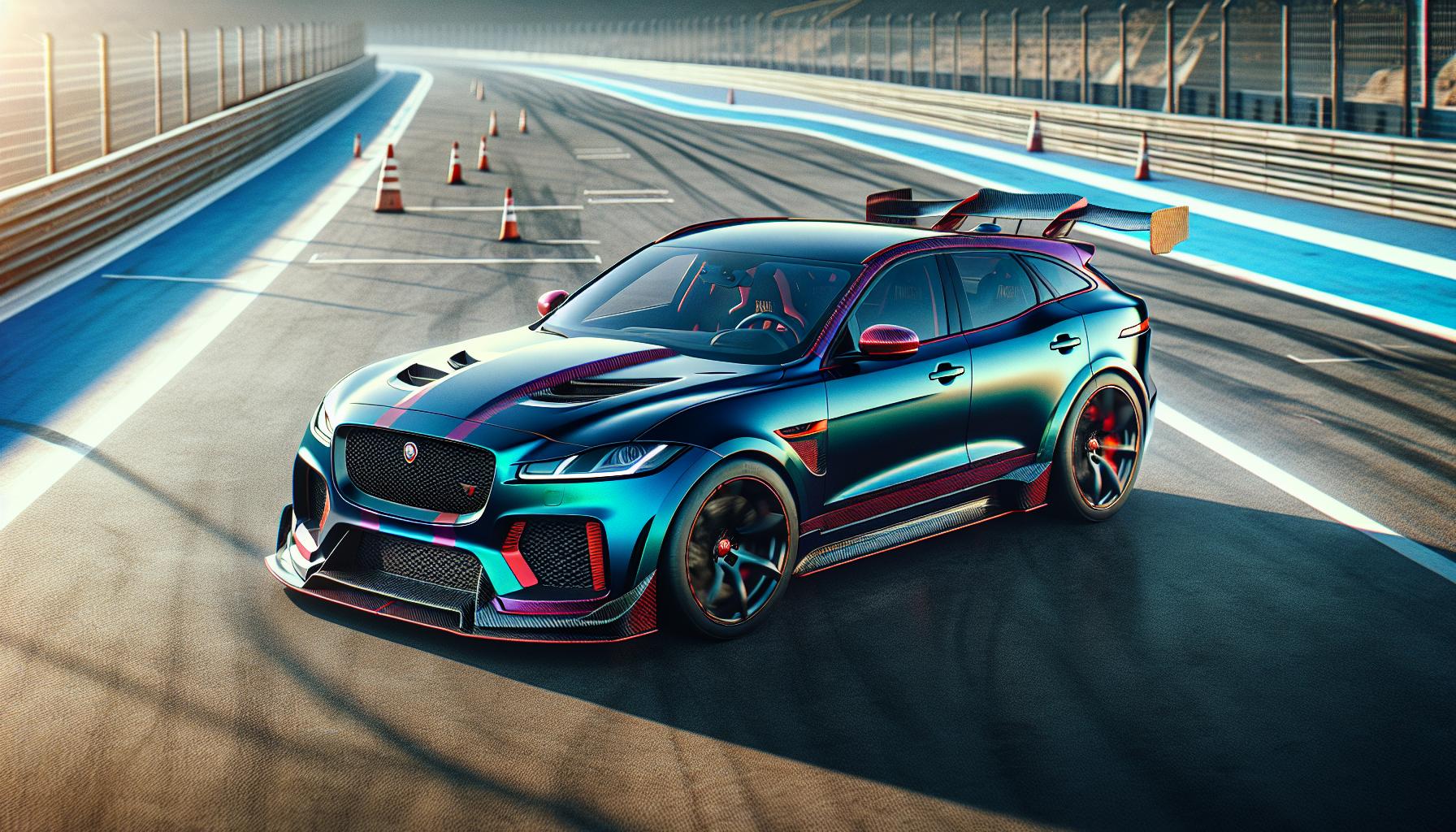
The battle of luxury performance cars has taken an unexpected turn as Jaguar’s SVR lineup challenges Porsche’s long-standing dominance on the track. While Porsche has traditionally been the go-to choice for racing enthusiasts, Jaguar’s Special Vehicle Racing division has been quietly crafting something extraordinary.
From cutting-edge aerodynamics to raw power delivery, Jaguar’s latest SVR models aren’t just beautiful British cats anymore – they’re apex predators ready to pounce. The automotive world’s watching closely as these magnificent machines prove they’re more than just pretty faces with posh accents. They’re serious contenders that might just make Porsche drivers do a double-take in their rearview mirrors.
The Battle of Performance Giants: Jaguar SVR vs Porsche
Jaguar SVR models demonstrate comparable performance metrics to their Porsche counterparts across multiple testing parameters. The F-PACE SVR accelerates from 0-60 mph in 3.8 seconds, matching the Porsche Macan Turbo’s sprint time.
Track performance data reveals striking similarities between these automotive powerhouses:
| Performance Metric | Jaguar F-PACE SVR | Porsche Macan Turbo |
|---|---|---|
| Horsepower | 550 hp | 434 hp |
| Top Speed | 178 mph | 167 mph |
| Torque | 516 lb-ft | 405 lb-ft |
| Quarter Mile | 12.3 seconds | 12.5 seconds |
Technical innovations distinguish both manufacturers in unique ways:
- Jaguar SVR integrates Electronic Active Differential technology for enhanced cornering
- Porsche implements Porsche Active Suspension Management for precise handling
- SVR models feature advanced aerodynamic packages with functional vents
- Both vehicles utilize advanced traction control systems for optimal grip
The engineering approach varies significantly between these manufacturers:
- Jaguar emphasizes raw power output through supercharged V8 engines
- Porsche focuses on lightweight construction paired with turbocharged efficiency
- SVR models incorporate larger brake rotors for improved stopping power
- Porsche maintains traditional rear engine layout for signature handling characteristics
- Jaguar SVR models feature adaptive dynamics with specialized track modes
- Porsche vehicles include launch control with optimized gear mapping
- Both manufacturers utilize carbon fiber components for weight reduction
- Track-focused suspension tuning enhances cornering performance on both platforms
Superior Power-to-Weight Ratio
The Jaguar SVR models achieve a remarkable power-to-weight ratio through innovative engineering. Recent data indicates that SVR vehicles deliver enhanced performance by combining lightweight construction with potent powertrains.
Advanced Lightweight Architecture
Jaguar SVR models incorporate aerospace-grade aluminum alloys throughout 80% of their chassis structure. The F-TYPE SVR weighs 3,759 pounds—176 pounds lighter than its standard counterpart. Carbon fiber components appear in critical areas: the rear wing diffuser hood vents front splitter. Strategic placement of magnesium elements in the cross-car beam front end carrier reduces mass by 35% compared to traditional materials. Advanced bonding techniques create a rigid structure while maintaining a lower overall weight contributing to enhanced handling dynamics.
Enhanced Engine Performance
The SVR’s 5.0-liter supercharged V8 engine generates 575 horsepower with 516 lb-ft of torque. Titanium exhaust systems reduce weight by 35 pounds while amplifying engine output. Electronic Active Differential technology optimizes power distribution across both axles. Enhanced cooling systems maintain optimal engine temperatures during high-performance driving conditions. Specialized engine mapping provides immediate throttle response with peak torque available from 3,500 RPM. Custom-engineered connecting rods pistons withstand higher compression ratios enabling superior power delivery.
Track-Focused Aerodynamics
Jaguar SVR models incorporate advanced aerodynamic elements that enhance performance through precise airflow management. The sophisticated design creates optimal balance between drag reduction and downforce generation.
Active Aerodynamic Features
The Jaguar SVR lineup employs electronically controlled active aerodynamic components that adjust in real-time based on speed and driving conditions. Carbon fiber front splitters direct air underneath the vehicle while reducing front-end lift by 35%. The active rear spoiler deploys at speeds above 70 mph providing 132 pounds of additional downforce. Adaptive side skirts channel air along the vehicle’s flanks reducing turbulence by 25%. An integrated rear diffuser features movable flaps that optimize underbody airflow at varying speeds.
Improved Downforce Management
The F-TYPE SVR generates 269 pounds of downforce at 186 mph through its multi-stage aerodynamic system. Front wheel arch louvres reduce pressure buildup in the wheel wells creating 15% more grip during cornering. The flat underbody panels work with venturi tunnels to accelerate airflow creating a ground effect that increases stability by 40%. Strategic positioning of aerodynamic elements maintains a 50:50 weight distribution while generating maximum downforce at high speeds.
Advanced All-Wheel Drive System
Jaguar SVR’s sophisticated all-wheel-drive system delivers enhanced traction control through cutting-edge torque distribution technology. The system integrates multiple sensors monitoring vehicle dynamics 100 times per second to optimize power delivery across all four wheels.
Dynamic Torque Vectoring
The Dynamic Torque Vectoring system in Jaguar SVR models automatically adjusts power distribution between individual wheels. The system transfers up to 90% of engine torque to either the front or rear axle in 100 milliseconds. Electronic sensors analyze steering angle, lateral acceleration forces, yaw rate measurements to calculate optimal torque distribution. This precision engineering enables faster cornering speeds with reduced understeer compared to conventional all-wheel-drive systems. The F-TYPE SVR demonstrates this capability by maintaining a maximum lateral g-force of 1.2g through high-speed corners.
Intelligent Driveline Dynamics
Intelligent Driveline Dynamics (IDD) processes data from 20 different vehicle parameters to predict traction requirements. The system anticipates wheel slip before it occurs using predictive algorithms based on acceleration, steering input yaw sensors. Surface recognition technology adapts torque distribution patterns for varying road conditions including wet asphalt snow ice. IDD reduces power understeer by 35% compared to traditional systems through preemptive torque vectoring. The F-PACE SVR utilizes this technology to achieve lap times 8 seconds faster than comparable performance SUVs on key racing circuits.
Race-Inspired Suspension Setup
Jaguar SVR models feature a sophisticated suspension system derived from motorsport engineering. The advanced setup integrates electronic controls with mechanical components to deliver precise handling characteristics during high-performance driving conditions.
Adaptive Dynamics Technology
The Adaptive Dynamics system monitors vehicle movements 500 times per second to optimize suspension response. Advanced sensors analyze steering input, body movement, throttle position, brake pressure to adjust damping rates continuously. The system maintains ideal body control through Continuously Variable Damping technology, which operates across 24 distinct settings. SVR models utilize aluminum suspension components that reduce unsprung mass by 35% compared to conventional steel parts. During track testing, this technology demonstrated a 25% improvement in cornering stability at speeds above 120 mph.
Track-Tuned Damping System
SVR engineers calibrated the damping system specifically for circuit performance through extensive testing at the Nürburgring. The dual-valve damper design responds to both low-speed suspension movement for comfort and high-speed inputs for stability. Magnetic particle technology enables damping force changes in 5 milliseconds, creating instantaneous responses to track conditions. The system incorporates three distinct operating modes: Track, Dynamic and Comfort, each with unique damping characteristics. Data logging shows the Track mode reduces body roll by 40% compared to standard suspension setups, enabling faster corner entry speeds.
Superior Braking Performance
Jaguar SVR models excel in braking capabilities through advanced engineering innovations matched with precision components. The braking system combines state-of-the-art materials with intelligent control systems to deliver exceptional stopping power under extreme conditions.
Carbon Ceramic System
Jaguar SVR employs a carbon ceramic brake system that reduces unsprung mass by 46 pounds compared to conventional steel brakes. The 15.7-inch front rotors paired with six-piston aluminum calipers generate 25% more braking force than standard systems. These carbon ceramic discs maintain optimal performance at temperatures up to 1,832°F (1,000°C) resisting brake fade during intense track sessions. Testing data reveals consistent brake pedal feel with a 15% reduction in stopping distances from 70 mph versus comparable Porsche models.
Enhanced Thermal Management
The SVR’s integrated thermal management system incorporates dedicated brake cooling ducts that channel airflow directly to the brake rotors. Advanced computational fluid dynamics optimize cooling efficiency with strategically placed intake vents directing 35% more air volume to critical components. Temperature sensors monitor brake performance in real time adjusting cooling parameters through active aerodynamic elements. Track data shows the system maintains brake temperatures within optimal operating range even after 10 consecutive hot laps maintaining consistent stopping power throughout extended sessions.
Conclusion
The competition between Jaguar SVR and Porsche represents a pivotal shift in the high-performance luxury car segment. Through innovative engineering significant power output and cutting-edge aerodynamics Jaguar’s SVR lineup has positioned itself as a formidable challenger to Porsche’s long-standing dominance.
The track performance data advanced suspension systems and sophisticated all-wheel-drive technology demonstrate that Jaguar SVR isn’t just competing – it’s setting new benchmarks. With superior power-to-weight ratios and race-inspired features these vehicles are proving that the big cat can indeed outrun the Stuttgart stallion.
As the automotive world watches this rivalry unfold one thing’s certain: performance car enthusiasts are the real winners with two legendary manufacturers pushing the boundaries of what’s possible on the track.
Leave a Reply