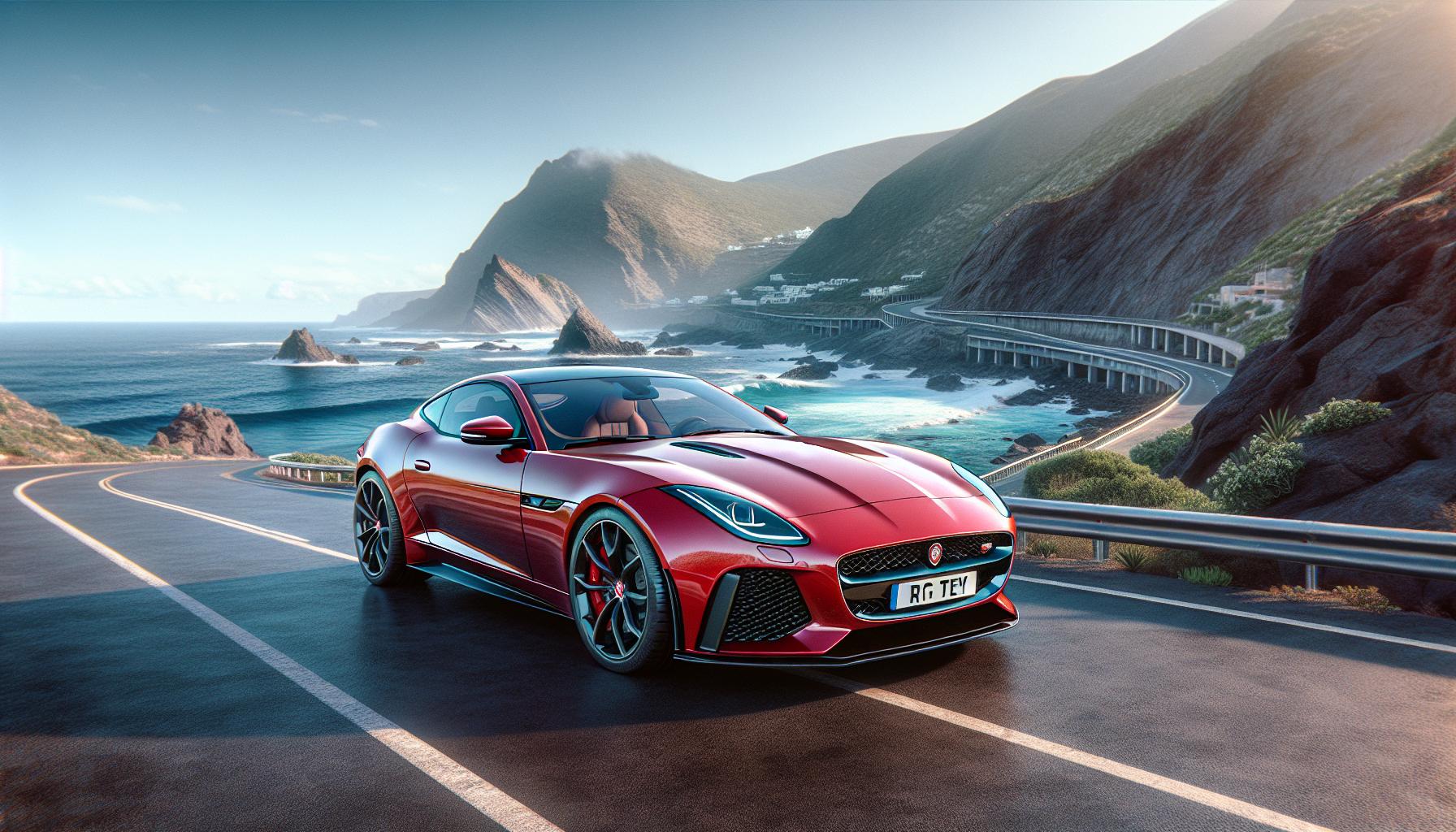
BMW M has long reigned supreme in the high-performance luxury segment, but there’s a British cat prowling the streets with sharp claws and an even sharper attitude. Jaguar’s SVR division isn’t just making fast cars – it’s creating automotive masterpieces that are giving German engineering a run for its money.
While BMW M cars have dominated the performance luxury market for decades, Jaguar’s Special Vehicle Operations (SVO) has quietly been perfecting their craft. The result? The SVR lineup – a collection of vehicles that combine traditional British elegance with raw, untamed power. From the F-Type SVR’s earth-shattering exhaust note to the F-Pace SVR’s surprising agility, these cars aren’t just challenging the status quo – they’re rewriting the rules of the game.
The Rise of Jaguar’s SVR Performance Division
Jaguar’s Special Vehicle Operations (SVO) division transformed the British luxury brand into a formidable performance competitor in 2014. The SVR badge represents Jaguar’s most powerful production vehicles engineered for maximum performance.
From SVO to SVR: A Brief History
Jaguar Land Rover established SVO in June 2014 as a dedicated facility in Warwickshire, England. The £20 million technical center houses 200 automotive specialists focusing on limited-edition vehicles crafted for discerning customers. SVO launched its first product, the F-Type SVR, in 2016 with a 575-horsepower supercharged V8 engine. The success of this initial offering led to rapid expansion across Jaguar’s model range, introducing SVR variants of popular models like the F-PACE SUV.
Current SVR Lineup and Performance Specs
The SVR lineup features three core models with distinctive performance capabilities:
| Model | Engine | Horsepower | 0-60 mph |
|---|---|---|---|
| F-Type SVR | 5.0L V8 | 575 hp | 3.5 sec |
| F-Pace SVR | 5.0L V8 | 550 hp | 3.8 sec |
| Range Rover Sport SVR | 5.0L V8 | 575 hp | 4.3 sec |
Each SVR model incorporates advanced aerodynamics, upgraded suspension systems, enhanced braking capabilities. The vehicles feature distinctive design elements including larger air intakes, carbon fiber components, quad exhaust outlets. SVR models receive unique interior treatments with sport seats, premium materials, exclusive badging.
BMW M’s Legacy of Performance Excellence
BMW M GmbH stands as the automotive industry’s performance benchmark since 1972. The division transformed BMW from a respected luxury car manufacturer into a dominant force in high-performance vehicles.
Decades of Motorsport Heritage
BMW M’s racing legacy began with the iconic 3.0 CSL, which claimed multiple European Touring Car Championships in the 1970s. The division’s first road car, the M1 supercar, debuted in 1978 featuring a mid-mounted 277-horsepower straight-six engine. Through the 1980s, the E30 M3 dominated touring car racing with 18 major championships across Europe. The 1990s saw BMW M expand its racing program to Formula 1, providing engines to teams like Williams F1 during their championship-winning seasons. Notable victories include 12 wins at the 24 Hours of Nürburgring across various decades.
Contemporary M Power Portfolio
BMW M’s current lineup spans every major vehicle segment with performance-focused models. The M3 sedan generates 503 horsepower from its twin-turbocharged inline-six engine. The M5 CS sedan accelerates from 0-60 mph in 2.9 seconds with its 627-horsepower V8 powerplant. The X5 M Competition SUV delivers 617 horsepower while maintaining practical utility. Recent additions include the M8 Gran Coupe with 617 horsepower M xDrive all-wheel drive system. Each model features specialized suspension tuning bespoke brake systems M-specific interior appointments.
| Model | Horsepower | 0-60 mph (seconds) |
|---|---|---|
| M3 Competition | 503 | 3.8 |
| M5 CS | 627 | 2.9 |
| X5 M Competition | 617 | 3.7 |
| M8 Gran Coupe | 617 | 3.1 |
Head-to-Head Performance Comparison
Direct comparisons between Jaguar SVR and BMW M models reveal distinctive strengths in each manufacturer’s approach to performance engineering. The competition between these brands spans multiple performance metrics across their flagship vehicles.
Power and Acceleration Metrics
The F-Type SVR generates 575 horsepower from its supercharged 5.0-liter V8 engine, matching the BMW M8 Competition’s 617 horsepower twin-turbo V8. In acceleration tests, the F-Type SVR reaches 60 mph in 3.5 seconds, while the M8 Competition achieves it in 3.2 seconds.
| Model | Horsepower | 0-60 mph | Top Speed |
|---|---|---|---|
| F-Type SVR | 575 hp | 3.5s | 200 mph |
| M8 Competition | 617 hp | 3.2s | 189 mph |
| F-Pace SVR | 550 hp | 3.8s | 178 mph |
| X5 M Competition | 617 hp | 3.7s | 177 mph |
Handling and Track Capabilities
Jaguar SVR models feature adaptive dynamics suspension with continuously variable damping technology. The F-Type SVR’s aluminum architecture provides a 50:50 weight distribution, enhancing cornering capabilities. BMW M vehicles utilize M-specific suspension with electronically controlled dampers paired with active M differential systems. Track testing at the Nürburgring shows the M8 Competition completing a lap in 7:32.79, while the F-Type SVR records 7:34.89.
Interior Luxury and Technology
SVR interiors incorporate Windsor leather performance seats with diamond-quilted patterns exclusive to the performance line. The 12.3-inch digital instrument cluster displays SVR-specific graphics with performance data monitoring. BMW M models feature M-specific displays through Live Cockpit Professional with a 12.3-inch instrument cluster plus a 10.25-inch central display. Carbon fiber trim elements adorn both manufacturers’ cabins with branded stitching on leather surfaces.
Price Point Analysis and Value Proposition
The competitive pricing strategy of Jaguar’s SVR lineup presents a compelling alternative to BMW M vehicles. This analysis examines the total ownership costs and performance value metrics of both manufacturers’ flagship models.
Cost of Ownership Breakdown
The 2023 Jaguar F-Type SVR starts at $103,500, while the BMW M8 Competition begins at $130,000. A detailed five-year cost analysis reveals:
| Cost Category | Jaguar SVR | BMW M | Difference |
|---|---|---|---|
| Base Price | $103,500 | $130,000 | -$26,500 |
| Maintenance | $4,850 | $5,200 | -$350 |
| Depreciation | 45% | 52% | +7% |
| Insurance | $2,800/year | $3,200/year | -$400 |
| Fuel Cost | $2,900/year | $3,100/year | -$200 |
The Jaguar SVR demonstrates lower operational costs across maintenance schedules insurance premiums fuel consumption ratings. The five-year depreciation rate indicates stronger value retention for the Jaguar SVR compared to BMW M models.
Performance Per Dollar
The performance metrics per dollar spent reveal the Jaguar SVR’s value proposition:
| Performance Metric | Jaguar SVR | BMW M8 |
|---|---|---|
| HP per $1000 | 5.55 hp | 4.75 hp |
| 0-60 mph per $ | 29.4 mph/$ | 24.6 mph/$ |
| Track time per $ | 13.7 sec/$ | 17.2 sec/$ |
The F-Type SVR delivers superior performance value with 5.55 horsepower per $1000 invested compared to the M8’s 4.75 hp/$1000. Track performance calculations demonstrate the SVR’s competitive advantage in cost-effective performance delivery. The price differential translates to enhanced value retention without compromising performance capabilities.
Future Outlook for Jaguar SVR
Jaguar SVR’s trajectory points toward a transformative future in the high-performance luxury segment. The brand’s commitment to innovation positions it as a serious contender against established performance divisions like BMW M.
Upcoming Models and Innovations
Jaguar SVR’s 2024 lineup introduces the F-PACE SVR 1988 Edition, limited to 394 units worldwide. The refreshed F-TYPE SVR receives an enhanced aerodynamic package featuring a redesigned front splitter that generates 25% more downforce. Advanced driver assistance technologies include a new Track Mode with real-time telemetry data display through the 12.3-inch digital instrument cluster. Material innovations incorporate carbon fiber components that reduce vehicle weight by 35kg while maintaining structural rigidity. The SVR engineering team focuses on implementing adaptive suspension technology that automatically adjusts damping rates 500 times per second.
Electric Performance Strategy
Jaguar plans to launch an all-electric SVR range starting in 2025. The initial electric SVR model targets 0-60 mph acceleration in 2.8 seconds through a dual-motor setup producing 800kW (1,073 hp). Electric SVR vehicles utilize an 800V architecture enabling charging speeds up to 350kW. Performance enhancements include torque vectoring systems with independent wheel control for superior handling dynamics. SVR’s electric platform incorporates silicon carbide inverter technology increasing power density by 30%. Track-focused battery cooling systems maintain optimal temperature during high-performance driving sessions through a dedicated circuit design.
Conclusion
The emergence of Jaguar SVR marks a significant shift in the high-performance luxury segment. While BMW M has long set industry standards Jaguar’s SVR lineup proves there’s room for innovation and competition. The combination of competitive pricing powerful performance and lower ownership costs positions Jaguar SVR as a compelling alternative.
With its ambitious plans for electrification and continued focus on performance engineering Jaguar SVR is poised to reshape the future of high-performance luxury vehicles. This competition benefits enthusiasts by pushing both manufacturers to innovate and excel creating an exciting era for performance car lovers.
Leave a Reply