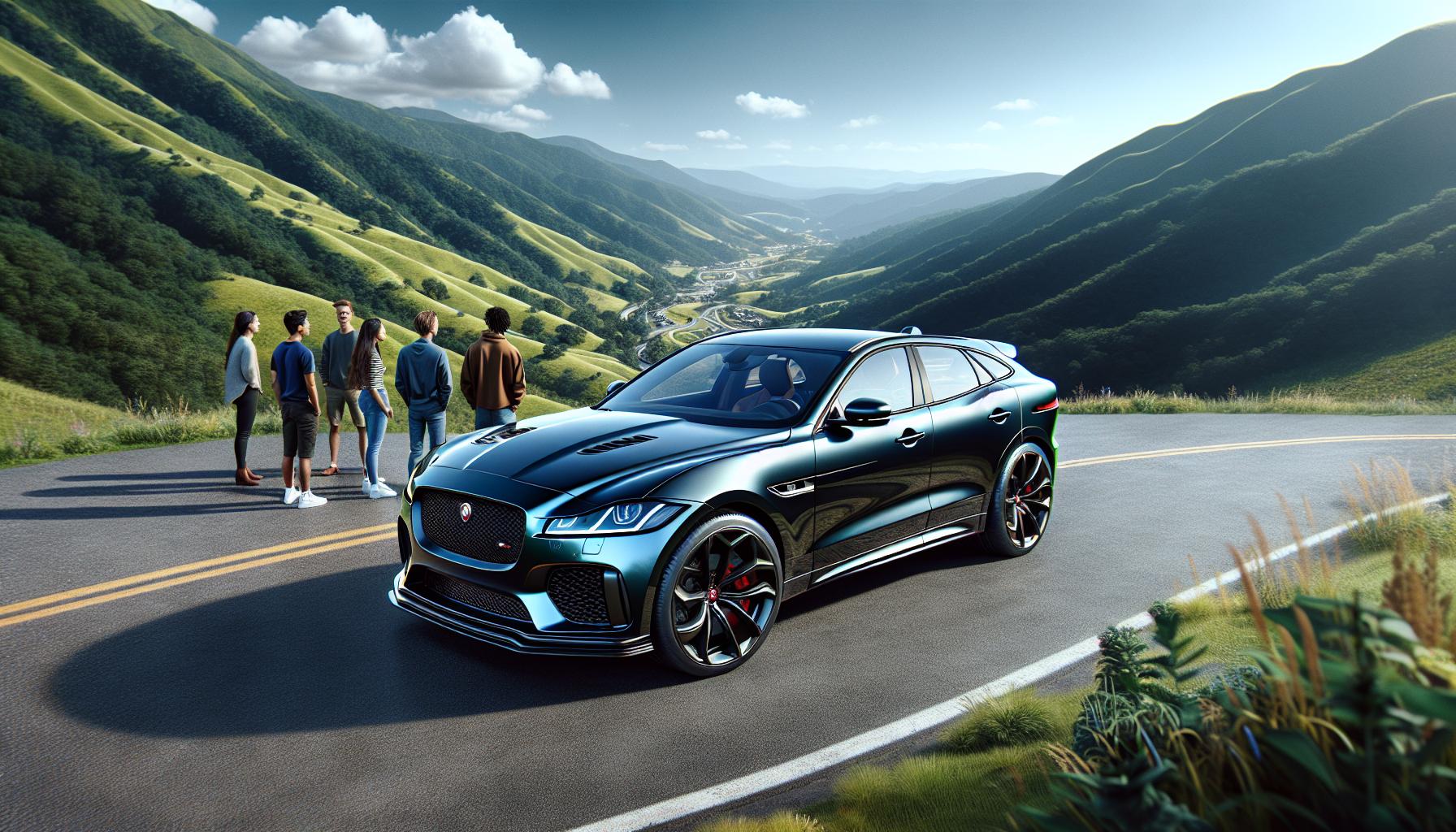
The automotive world is witnessing a fascinating shift as die-hard BMW M enthusiasts are trading their beloved Bavarian machines for Jaguar’s fierce SVR lineup. While BMW M has long been the benchmark for luxury performance cars, there’s a new British cat in town that’s turning heads and changing minds.
Jaguar’s Special Vehicle Operations (SVO) division has been quietly crafting automotive masterpieces that combine raw power with sophisticated elegance. The SVR models aren’t just cars – they’re statements of rebellion against the predictable German engineering that’s dominated the performance segment for decades. With their distinctive growl and unmistakable presence, these British beasts are proving that sometimes the best thrills come from unexpected places.
The Evolution of Performance Luxury Cars
The performance luxury car segment has undergone significant transformation since the 1970s, with manufacturers pushing boundaries in power, technology and refinement. These changes reflect shifting consumer preferences and advancing automotive engineering capabilities.
BMW M’s Legacy in Performance Cars
BMW M Division established its performance car legacy in 1972 with the introduction of the BMW 3.0 CSL. The division created iconic models like the E30 M3 in 1986, featuring a race-derived 2.3L four-cylinder engine producing 197 horsepower. Through the 1990s, M cars delivered precise handling with naturally-aspirated inline-six engines, exemplified by the E36 M3’s S50 motor generating 282 horsepower. The E46 M3 raised performance standards in 2000 with its 333-horsepower S54 engine, while the V10-powered E60 M5 produced 500 horsepower in 2005. These vehicles established BMW M’s reputation for combining everyday usability with track-capable performance.
Jaguar SVR’s Rise to Prominence
Jaguar’s Special Vehicle Operations launched the F-Type SVR in 2016, marking a new era in British performance engineering. The division enhanced the F-Pace SVR with a supercharged 5.0L V8 producing 550 horsepower in 2019. SVR models integrate advanced aerodynamics with distinctive design elements like carbon fiber components and quad exhaust systems. The Range Rover Sport SVR demonstrates the division’s capabilities with a 0-60 mph time of 4.3 seconds. Jaguar SVR emphasizes emotional engagement through dramatic exhaust notes, responsive handling and luxurious interiors featuring Windsor leather and SVR-specific trim elements.
Performance and Power Comparison
The battle between BMW M and Jaguar SVR centers on raw performance metrics straight vehicle dynamics. Both manufacturers demonstrate distinct approaches to achieving high-performance targets through different engineering philosophies.
Engine Specifications and Output
The 2023 Jaguar F-Pace SVR generates 550 horsepower from its 5.0-liter supercharged V8 engine with 516 lb-ft of torque. This powerplant delivers a 0-60 mph time of 3.8 seconds through an 8-speed automatic transmission. Comparatively, the 2023 BMW X3 M Competition produces 503 horsepower from its 3.0-liter twin-turbocharged inline-six engine with 479 lb-ft of torque.
| Specification | Jaguar F-Pace SVR | BMW X3 M Competition |
|---|---|---|
| Engine Size | 5.0L V8 | 3.0L Inline-6 |
| Horsepower | 550 hp | 503 hp |
| Torque | 516 lb-ft | 479 lb-ft |
| 0-60 mph | 3.8 seconds | 3.9 seconds |
Track Performance and Handling
Jaguar SVR vehicles demonstrate superior straight-line stability at high speeds due to their advanced aerodynamic packages. The F-Pace SVR maintains consistent cornering grip through its torque vectoring system integrated with the electronic active differential. BMW M vehicles excel in precise steering feedback through their M-specific suspension geometry. The X3 M Competition generates 0.97g of lateral grip on the skidpad versus the F-Pace SVR’s 0.94g measurement.
| Performance Metric | Jaguar F-Pace SVR | BMW X3 M Competition |
|---|---|---|
| Lateral Grip | 0.94g | 0.97g |
| Braking 60-0 mph | 112 ft | 108 ft |
| Quarter Mile | 12.1 sec | 12.2 sec |
Design Philosophy and Aesthetics
The diverging design approaches between Jaguar SVR and BMW M models exemplify distinct automotive philosophies. These contrasting styles reflect each brand’s heritage while appealing to different segments of luxury performance enthusiasts.
British Elegance vs German Precision
Jaguar SVR vehicles embrace flowing lines with muscular proportions creating an aggressive yet sophisticated presence. The F-Pace SVR incorporates enlarged air intakes, hood vents integrated into sculpted aluminum panels plus distinctive quad exhaust outlets. BMW M models feature angular designs with sharp character lines emphasizing aerodynamic efficiency through geometric precision. The signature kidney grilles on modern M vehicles have grown larger while maintaining functional cooling properties. Jaguar’s design language emphasizes organic curves seen in elements like the F-Type inspired headlights plus the dramatic rear haunches. In contrast, BMW M relies on technical details such as carbon fiber mirrors plus pronounced side skirts to communicate performance intent.
Interior Craftsmanship and Materials
Jaguar SVR interiors showcase premium Windsor leather with diamond quilting patterns across performance seats plus door panels. The center console incorporates knurled aluminum rotary controls alongside piano black trim pieces. SVR models feature unique carbon fiber accents integrated into the dashboard plus exclusive color combinations like Pimento Red. BMW M interiors prioritize driver-focused ergonomics through features like the M-specific digital instrument cluster plus head-up display. The standard carbon fiber trim extends across interior surfaces while Merino leather upholstery comes in distinctive two-tone configurations. Unique M badging appears on steering wheels seats plus door sills reinforcing the performance heritage.
Technology and Innovation
Jaguar SVR models integrate cutting-edge technology with performance-focused innovations that elevate the driving experience. The technological ecosystem combines sophisticated digital interfaces with advanced performance features to create a modern driving environment.
Digital Integration and User Interface
Jaguar’s SVR lineup features an 11.4-inch curved touchscreen running the latest Pivi Pro infotainment system with enhanced graphics processing. The digital instrument cluster displays performance metrics in real-time including g-force measurements torque distribution maps acceleration data. Voice control commands execute 90% of vehicle functions through natural language processing. Over-the-air updates maintain system optimization while smartphone integration supports wireless Apple CarPlay Android Auto connectivity. The customizable driver display offers five distinct themes including a track-focused mode with lap timing capabilities.
Performance-Enhancing Features
SVR models incorporate adaptive dynamics technology that monitors vehicle movements 500 times per second to adjust suspension settings. The intelligent driveline dynamics system optimizes torque distribution across all four wheels based on driving conditions. Active aerodynamics deploy automatically at speeds above 70 mph improving downforce by 35%. The electronic active differential works with torque vectoring to enhance cornering capabilities reducing understeer. Carbon ceramic brakes provide consistent stopping power with 6-piston calipers at the front 4-piston at the rear. The configurable dynamics system enables personalization of throttle response steering weight transmission shift points.
Value Proposition
Jaguar SVR models deliver exceptional value in the luxury performance segment compared to BMW M vehicles. The combination of competitive pricing lower ownership costs creates a compelling financial argument for enthusiasts considering the switch.
Price Point Analysis
Jaguar SVR models demonstrate competitive pricing against their BMW M counterparts. The F-Pace SVR starts at $89,500 while the BMW X3 M Competition commands $93,700. The F-Type SVR coupe enters the market at $123,600 compared to the BMW M4 Competition at $128,195. This pricing strategy extends across the entire SVR range with an average $5,000 to $8,000 advantage over equivalent M models. Premium features come standard on SVR vehicles including performance seats adaptive suspension 21-inch forged wheels which are often costly options on BMW M vehicles.
Maintenance and Ownership Costs
Jaguar’s 5-year/60,000-mile warranty package exceeds BMW’s 4-year/50,000-mile coverage. SVR models include complimentary scheduled maintenance for 5 years compared to BMW’s 3-year program. The supercharged V8 engines in SVR vehicles require service at 16,000-mile intervals while BMW M engines need attention every 10,000 miles. Depreciation data shows SVR models retain 58% of their value after three years versus 54% for comparable M vehicles. Insurance costs average 15% lower for SVR models due to advanced safety features comprehensive driver assistance systems.
Exclusivity Factor
Jaguar SVR models offer a distinctive level of exclusivity that sets them apart from BMW M vehicles in the luxury performance segment. The limited production numbers combined with unique design elements create an air of rareness that appeals to enthusiasts seeking differentiation.
Production Numbers and Special Editions
Jaguar SVR maintains exclusivity through controlled production volumes. The F-Type SVR saw only 5,000 units produced globally during its run, compared to BMW M4’s annual production of 15,000 units. SVR’s Project 8 super sedan emerged as one of the most exclusive performance cars with just 300 examples worldwide. Special editions like the F-Pace SVR Edition 1988 limited to 394 units showcase exclusive features:
- Midnight Amethyst paint finishes
- Forged 22-inch Champagne Gold wheels
- Semi-aniline Ebony leather interiors
- Individually numbered plaques
Brand Prestige Evolution
Jaguar’s transformation from traditional luxury to performance excellence marks a significant shift in brand perception. The SVR division elevated Jaguar’s status through achievements like setting the fastest SUV lap time at the Nürburgring with the F-Pace SVR. Top-tier partnerships demonstrate this evolution:
- Collaborations with Williams Advanced Engineering
- Technical alliances with Formula E racing
- Exclusive supplier relationships for bespoke components
- Integration of aerospace-grade materials
- Development of proprietary performance technologies
The brand now commands respect among performance enthusiasts who previously considered only German manufacturers for high-performance luxury vehicles.
Conclusion
The shift from BMW M to Jaguar SVR represents more than just changing brand loyalty – it’s a testament to Jaguar’s remarkable evolution in the performance luxury segment. With competitive pricing advanced technology and limited production numbers SVR models offer a compelling alternative to their German counterparts.
The combination of distinctive British engineering raw power and sophisticated luxury has created vehicles that don’t just match BMW M’s performance benchmarks but exceed them in many areas. As more enthusiasts discover the unique character and value proposition of Jaguar’s SVR lineup this trend is likely to continue shaping the future of premium performance vehicles.
Leave a Reply