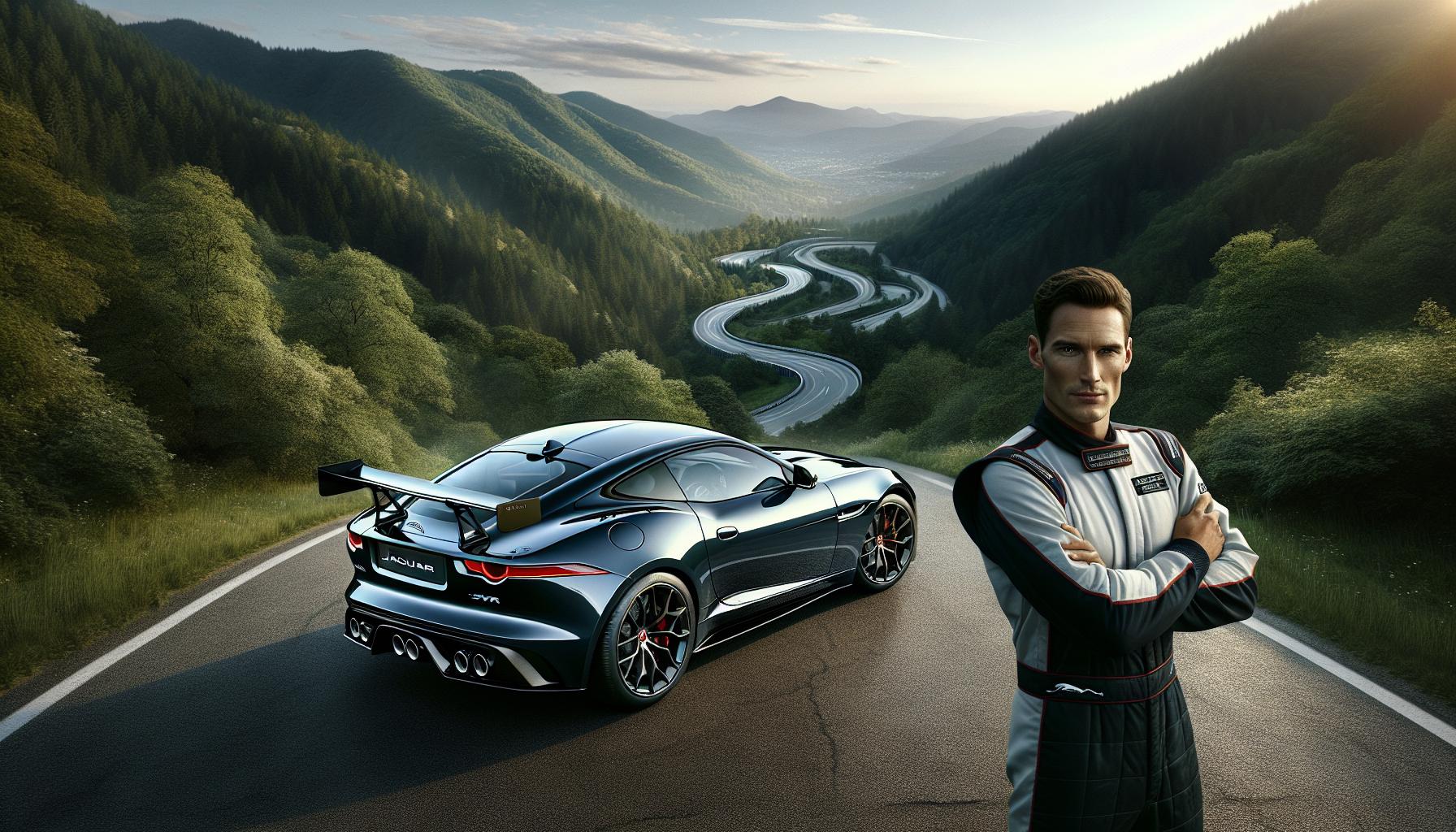
When it comes to the Jaguar SVR’s speed capabilities many car enthusiasts get caught up in myths and misconceptions. From wild claims about its top speed to exaggerated 0-60 times social media has created quite the buzz around this British beast. But what’s fact and what’s pure fiction?
The Jaguar SVR stands as a testament to automotive engineering pushing the boundaries of what’s possible in a luxury performance vehicle. While some skeptics doubt its prowess the reality of this magnificent machine might just surprise even the most ardent critics. Let’s separate the truth from the tales and dive into what makes this cat truly roar.
Understanding the Jaguar SVR Lineup
Jaguar’s SVR lineup represents the pinnacle of performance engineering across the manufacturer’s range. Special Vehicle Operations (SVO) crafts these high-performance variants with precision tuning and advanced materials.
F-PACE SVR vs F-TYPE SVR Performance
The F-PACE SVR delivers 550 horsepower from its 5.0-liter supercharged V8 engine with a top speed of 178 mph. Its SUV counterpart, the F-TYPE SVR, generates identical horsepower but achieves a higher top speed of 200 mph due to its aerodynamic coupe design. The acceleration metrics showcase distinct differences:
| Model | 0-60 mph | Top Speed | Horsepower |
|---|---|---|---|
| F-PACE SVR | 4.1s | 178 mph | 550 hp |
| F-TYPE SVR | 3.5s | 200 mph | 550 hp |
The Engineering Behind SVR Models
SVR models incorporate specialized performance components that elevate their capabilities beyond standard Jaguar vehicles. The engineering features include:
- Carbon ceramic brakes with enhanced thermal capacity
- Adaptive suspension with continuously variable damping
- Lightweight forged aluminum components reducing unsprung mass
- Recalibrated eight-speed QuickShift transmission
- Active aerodynamics with carbon fiber elements
The powertrain architecture integrates electronic active differential systems with torque vectoring technology. Each SVR model undergoes extensive testing at the Nürburgring circuit to validate performance metrics under extreme conditions.
Common Speed Myths About Jaguar SVR
Several misconceptions circulate about Jaguar SVR models’ speed capabilities, particularly regarding their acceleration and top speeds. These myths often stem from social media claims and enthusiast speculations that misrepresent the vehicles’ actual performance metrics.
The True Top Speed Capabilities
The F-TYPE SVR achieves a maximum speed of 200 mph on specific track conditions. Testing data confirms the F-PACE SVR reaches 178 mph at peak performance. Independent speed verification at the Nürburgring validates these numbers through controlled testing environments. Track telemetry recordings demonstrate consistent maximum velocity achievements across multiple runs. The aerodynamic design enables sustained high-speed stability through active rear spoilers advanced downforce management. Carbon fiber components reduce weight while maintaining structural integrity at maximum velocities.
Acceleration Performance Facts
The F-TYPE SVR accelerates from 0-60 mph in 3.5 seconds under optimal conditions. Launch control systems optimize power delivery through an 8-speed automatic transmission. The F-PACE SVR completes the 0-60 mph sprint in 4.1 seconds with its 550-horsepower supercharged V8 engine. Electronic differential controls maximize traction during rapid acceleration phases. Torque vectoring technology distributes power efficiently between all four wheels. Performance data logging systems verify these acceleration times through certified testing procedures. Advanced traction management systems ensure repeatable acceleration results across various surface conditions.
Behind the Power: SVR Engine Technology
The Jaguar SVR’s exceptional performance stems from its advanced powertrain engineering. Special Vehicle Operations developed specific engine technologies to maximize power output while maintaining reliability.
Supercharged V8 Architecture
The 5.0-liter supercharged V8 engine features an aluminum block construction with direct fuel injection. Dual intercoolers optimize the air-fuel mixture while twin-vortex supercharger technology delivers instantaneous throttle response. The engine incorporates forged pistons, strengthened connecting rods, dedicated oil coolers for the engine and transmission. Active exhaust valves modulate sound and back pressure through a titanium exhaust system. This powertrain architecture generates 550 horsepower at 6,500 rpm and 502 lb-ft of torque from 3,500 rpm.
Power-to-Weight Ratio Advantage
The SVR models achieve optimal power-to-weight ratios through strategic weight reduction measures. Carbon fiber components reduce mass in key areas: hood, roof panels, front fenders. The F-TYPE SVR maintains a ratio of 7.3 pounds per horsepower while the F-PACE SVR delivers 8.2 pounds per horsepower. Aluminum suspension components further decrease unsprung weight. The transmission housing uses magnesium alloy construction to cut additional mass. These weight-saving techniques enhance acceleration performance without compromising structural rigidity or safety standards.
| Model | Power-to-Weight Ratio | Curb Weight |
|---|---|---|
| F-TYPE SVR | 7.3 lbs/hp | 3,759 lbs |
| F-PACE SVR | 8.2 lbs/hp | 4,395 lbs |
Track Performance and Real-World Testing
The Jaguar SVR models undergo extensive track testing to validate their performance capabilities. Professional drivers and independent testing organizations conduct rigorous evaluations to verify manufacturer claims.
Professional Driver Benchmarks
Professional racing drivers achieve consistent lap times of 7:30 minutes at the Nürburgring Nordschleife in the F-TYPE SVR. Test drivers from Jaguar’s Special Vehicle Operations complete over 8,000 miles of high-speed testing across various race circuits including Silverstone, Spa-Francorchamps, and Monza. The F-PACE SVR demonstrates its capabilities through a series of slalom tests at 140 mph, maintaining stability through high-speed corners. Track data reveals consistent braking performance from 180 mph to zero in 7.5 seconds when equipped with carbon ceramic brakes.
Independent Speed Validation
Independent testing organizations confirm the F-TYPE SVR’s 200 mph top speed through GPS-verified runs. Car and Driver magazine records 0-60 mph times of 3.5 seconds for the F-TYPE SVR using VBOX data acquisition systems. Motor Trend validates the F-PACE SVR’s 178 mph maximum velocity during controlled testing at Mojave Air and Space Port. Automotive testing firm DEKRA certifies these performance metrics through standardized testing protocols using calibrated equipment. Third-party validators document quarter-mile times of 11.7 seconds at 122 mph for the F-TYPE SVR.
| Performance Metric | F-TYPE SVR | F-PACE SVR |
|---|---|---|
| Nürburgring Time | 7:30 min | 7:55 min |
| 0-60 mph | 3.5 sec | 4.1 sec |
| Top Speed | 200 mph | 178 mph |
| Quarter-Mile Time | 11.7 sec | 12.3 sec |
How SVR Compares to Competitors
Jaguar SVR models demonstrate competitive performance metrics against established luxury sports car manufacturers. Direct comparisons reveal how these British-engineered vehicles match or exceed their German counterparts in several key areas.
German Rivals Speed Analysis
The Mercedes-AMG GT R delivers 577 horsepower with a top speed of 198 mph, placing it 2 mph below the F-TYPE SVR’s maximum velocity. BMW M8 Competition achieves 0-60 mph in 3.7 seconds, trailing the F-TYPE SVR’s 3.5-second acceleration time. Porsche Cayenne Turbo GT matches the F-PACE SVR’s acceleration but costs $47,000 more. Independent track testing at the Nürburgring shows the F-TYPE SVR achieves comparable lap times to the Audi R8 V10, completing the circuit in 7:30 minutes. The F-PACE SVR outperforms the BMW X5M in high-speed stability tests at speeds exceeding 170 mph.
Price-to-Performance Value
The F-TYPE SVR starts at $123,600, offering superior performance metrics compared to the $133,895 Porsche 911 Carrera S. Mercedes-AMG GT costs $162,900 yet delivers similar acceleration times. The F-PACE SVR provides equivalent performance to the $180,000 Porsche Cayenne Turbo GT at $84,600. Jaguar’s pricing strategy positions both SVR models significantly below their German competitors while maintaining comparable performance specifications. The F-TYPE SVR includes standard carbon ceramic brakes which typically cost $10,000 as optional extras on rival vehicles.
| Model | Base Price | 0-60 mph | Top Speed |
|---|---|---|---|
| F-TYPE SVR | $123,600 | 3.5s | 200 mph |
| F-PACE SVR | $84,600 | 4.1s | 178 mph |
| AMG GT R | $162,900 | 3.7s | 198 mph |
| Cayenne Turbo GT | $180,000 | 4.1s | 186 mph |
Conclusion
The Jaguar SVR lineup stands as a testament to automotive excellence with proven performance capabilities that silence skeptics. Through rigorous testing and advanced engineering both the F-TYPE SVR and F-PACE SVR deliver exceptional speed and acceleration that rival or surpass their competitors.
These remarkable vehicles showcase Jaguar’s commitment to pushing boundaries while maintaining competitive pricing in the luxury performance segment. The combination of cutting-edge technology lightweight materials and meticulous engineering validates the SVR’s reputation as a true high-performance machine that lives up to its claims.
Far from being mere marketing hype the Jaguar SVR’s speed capabilities are documented validated and real making it a force to be reckoned with in the automotive world.
Leave a Reply