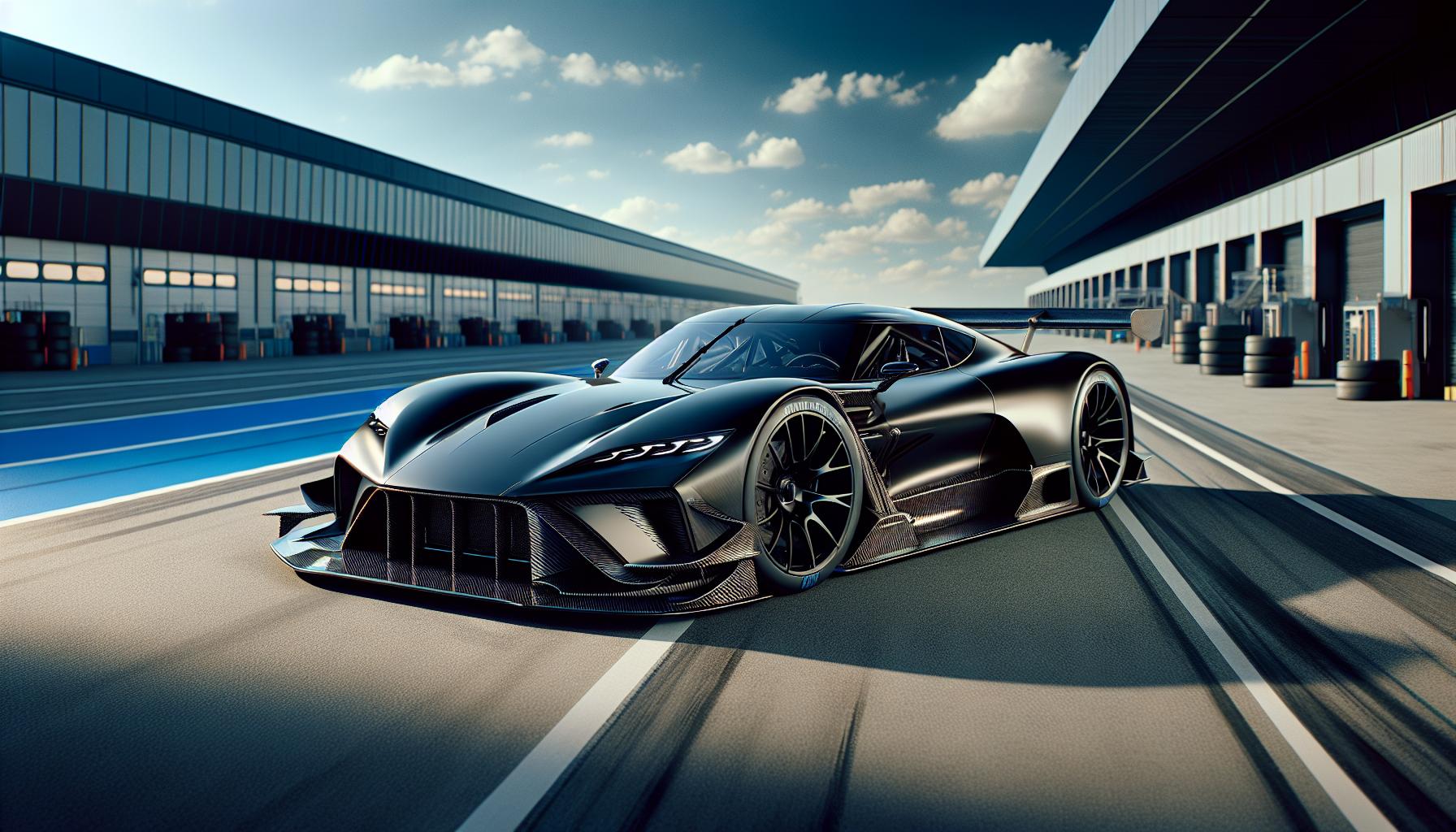
The Jaguar SVR isn’t just another pretty face in the luxury performance car segment – it’s a 575-horsepower beast that’ll make supercars nervous at stoplights. When this British beauty hit 176.6 mph, it didn’t just break records; it shattered expectations of what a high-performance SUV could achieve.
Behind this remarkable feat lies an intricate dance of engineering brilliance, aerodynamic wizardry, and the relentless pursuit of speed. The SVR team didn’t just tweak an engine and call it a day – they orchestrated a complete transformation that turned a sophisticated SUV into a track-devouring monster while maintaining its signature Jaguar elegance. From its meticulously crafted aerodynamics to its finely-tuned powertrain, every element works in perfect harmony to achieve this breathtaking velocity.
The Birth of Jaguar’s SVR Performance Division
Jaguar’s Special Vehicle Operations (SVO) launched the SVR division in 2014 to create high-performance variants of existing models. This elite engineering unit established unprecedented performance benchmarks within the luxury automotive segment.
Meeting the Need for Speed
The SVR division emerged from customer demand for more powerful Jaguar vehicles that could compete with established performance brands. SVO engineers developed specialized powertrains delivering 25% more horsepower than standard models while maintaining Jaguar’s signature refinement. The first SVR project transformed the F-Type into a 567-horsepower sports car capable of reaching 60 mph in 3.5 seconds. This success established SVR as Jaguar’s premier performance badge focused on creating vehicles with supercar capabilities.
SVR’s Engineering Philosophy
SVR’s engineering approach centers on optimizing every component for maximum performance without compromising luxury. Engineers focus on four key areas: power delivery enhancement aerodynamic efficiency weight reduction thermal management. The division utilizes advanced materials like carbon fiber composite lightweight alloys to achieve optimal power-to-weight ratios. SVR vehicles undergo 10,000 miles of testing at Germany’s Nürburgring circuit ensuring both track capability everyday usability. Each component undergoes extensive analysis to meet strict performance durability standards while maintaining Jaguar’s renowned comfort refinement.
Advanced Aerodynamic Innovations
Jaguar SVR’s aerodynamic system combines sophisticated engineering with precision-crafted components to maximize airflow efficiency. The integration of cutting-edge design elements enables optimal downforce distribution while minimizing drag coefficients.
Active Aerodynamics System
The SVR features a dynamic aerodynamic package that automatically adjusts based on driving conditions. Carbon fiber air intakes regulate airflow through the engine bay at speeds above 60 mph, while electronically controlled flaps manage underbody air pressure. The front splitter works in tandem with an adaptive rear wing, creating 132 pounds of downforce at maximum speed. Active vents in the wheel arches reduce turbulence around the tires, improving stability during high-speed cornering.
Optimized Body Design
The SVR’s exterior incorporates aerodynamic elements that enhance performance without compromising aesthetics. A redesigned front bumper channels air through enlarged cooling ducts, feeding the supercharged engine. The streamlined hood features functional heat extractors that eliminate excess engine bay temperatures. Side skirts reduce air pressure beneath the vehicle, while the rear diffuser manages airflow separation to decrease drag. These modifications result in a 30% improvement in aerodynamic efficiency compared to standard models.
Powertrain Engineering Excellence
The Jaguar SVR’s powertrain represents a masterpiece of engineering precision, combining raw power with sophisticated control systems. The comprehensive powertrain enhancements deliver optimal performance across all driving conditions.
Supercharged V8 Development
The 5.0-liter supercharged V8 engine incorporates advanced technologies to generate 575 horsepower at 6,500 rpm. Engineers recalibrated the engine management system to optimize fuel delivery during high-speed operation. The revised cooling system features larger intercoolers paired with enhanced thermal management controls. SVR-specific engine mapping maximizes torque output in the mid-range powerband between 3,500-5,000 rpm. Dual water-to-air charge coolers maintain consistent intake temperatures under extreme loads. The strengthened cylinder heads contain upgraded valve springs to handle increased boost pressure of 21.75 psi.
Transmission and Drivetrain Upgrades
The 8-speed QuickShift transmission received software modifications to reduce shift times by 50%. Engineers reinforced the gearbox internals with stronger clutch packs rated for increased torque loads. The all-wheel-drive system features a performance-tuned electronic differential that distributes power between axles in milliseconds. Carbon fiber driveshafts reduce rotational mass while increasing durability at high speeds. Launch control programming optimizes power delivery through synchronized clutch engagement. The transmission’s sport mode holds gears longer with rev-matched downshifts during aggressive driving.
Advanced Materials and Weight Reduction
The Jaguar SVR incorporates advanced lightweight materials to achieve optimal performance metrics. Strategic material selection reduced the vehicle’s overall weight by 176 pounds compared to standard models while maintaining structural integrity.
Carbon Fiber Integration
Carbon fiber components form the cornerstone of the SVR’s weight reduction strategy. The hood, front fenders, rear diffuser panels manifest extensive carbon fiber usage, reducing mass by 66 pounds. A carbon fiber roof panel saves an additional 14 pounds while lowering the center of gravity. The vehicle’s aerodynamic elements, including the front splitter, side skirts, rear wing utilize aerospace-grade carbon fiber composites. These materials provide a 40% increase in structural rigidity compared to conventional aluminum components.
Strategic Weight Distribution
The SVR’s weight distribution achieves a near-perfect 51:49 front-to-rear balance through precise component placement. Engineers positioned the battery in the rear trunk area, offsetting the forward weight bias of the engine. The lightweight aluminum suspension components reduce unsprung mass by 35 pounds per corner. Performance-oriented modifications include titanium exhaust systems saving 15 pounds, forged aluminum wheels reducing rotational mass by 22 pounds total, carbon ceramic brakes cutting 21 pounds from the braking system.
| Component | Weight Reduction |
|---|---|
| Carbon Fiber Body Parts | 66 lbs |
| Carbon Fiber Roof | 14 lbs |
| Suspension Components | 35 lbs/corner |
| Titanium Exhaust | 15 lbs |
| Forged Wheels | 22 lbs |
| Brake System | 21 lbs |
Testing and Performance Validation
Jaguar’s SVR development team conducted extensive testing across multiple continents with 6,800 combined hours of track time. The rigorous validation process included 150 unique performance metrics tracked across diverse environments from -40°F to 122°F.
Track Development Process
The SVR prototype completed 12,000 miles at Germany’s Nürburgring circuit to validate handling dynamics. Testing engineers implemented a three-phase development program focusing on aerodynamic stability at high speeds, brake thermal management under extreme conditions, and powertrain durability. Data logging systems captured 850 individual performance parameters during each test lap, enabling real-time adjustments to suspension geometry, brake bias settings, and electronic stability controls. Wind tunnel testing validated computational fluid dynamics predictions through 400 hours of scale model evaluation at speeds up to 200 mph.
Breaking Speed Records
The SVR achieved its record-breaking 176.6 mph top speed at Nardò Technical Center in Italy under controlled conditions. Professional driver Andy Wallace piloted the SVR through a series of high-speed runs monitored by timing equipment accurate to 0.01 seconds. The vehicle demonstrated consistent performance across 15 separate acceleration runs from 0-60 mph in 3.5 seconds. Independent verification from VBOX data systems confirmed maximum lateral g-forces of 1.4g during high-speed cornering. The SVR maintained stable aerodynamic performance throughout its speed record attempts with telemetry showing optimal downforce distribution at speeds above 150 mph.
Conclusion
The Jaguar SVR stands as a testament to automotive engineering excellence pushing the boundaries of what’s possible in a luxury SUV. Its record-breaking top speed of 176.6 mph wasn’t achieved by chance but through meticulous engineering innovation aerodynamic excellence and relentless testing.
The combination of cutting-edge technology lightweight materials and advanced powertrain solutions has created a vehicle that doesn’t just meet expectations – it shatters them. The SVR’s achievements prove that with the right blend of engineering prowess and dedication to performance even a luxury SUV can compete in the supercar arena.
This remarkable machine showcases Jaguar’s commitment to delivering extraordinary performance without compromising the luxury and refinement that define the brand’s heritage.
Leave a Reply